


Here’s a crazy story that I bet you’ve never heard. It used to be illegal to conduct business on the internet. I’m not kidding!
Until the United States government published an updated policy document in 1991, using the internet for commercial purposes was explicitly prohibited. I’m not kidding. Conducting commercial business was once banned on the internet. Can you imagine?
The National Science Foundation Network (NSFNET) was the backbone of what would become the modern internet. It was built for researchers, academics, and government institutions and the people who built it, intended to keep it that way. The Acceptable Use Policy was explicit: no for-profit activity, no advertising, and no private business. The network was for science and education…. that’s all.
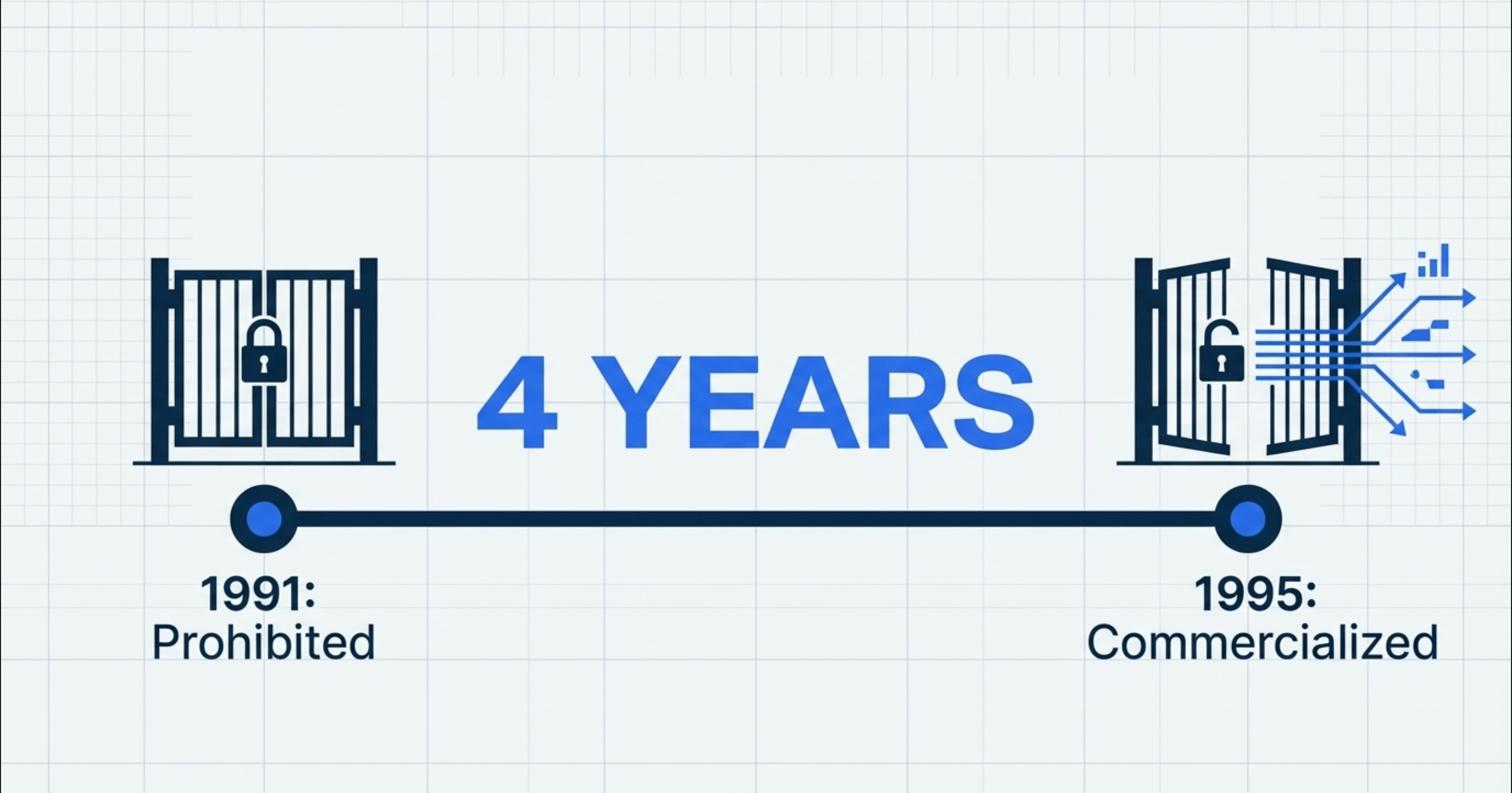
By 1991, the government removed the commercial restrictions. By 1995, the government backbone for the internet was decommissioned entirely and handed over to the private sector. In less than four years, we went from prohibited to the inevitable commercialization of the internet.
Today, who could even imagine doing business without using the internet. The question isn’t whether to use the internet for business, it’s how fast you can get more bandwidth. People and organizations that spent years debating whether commerce belonged online didn’t really protect anything, they just fell behind.
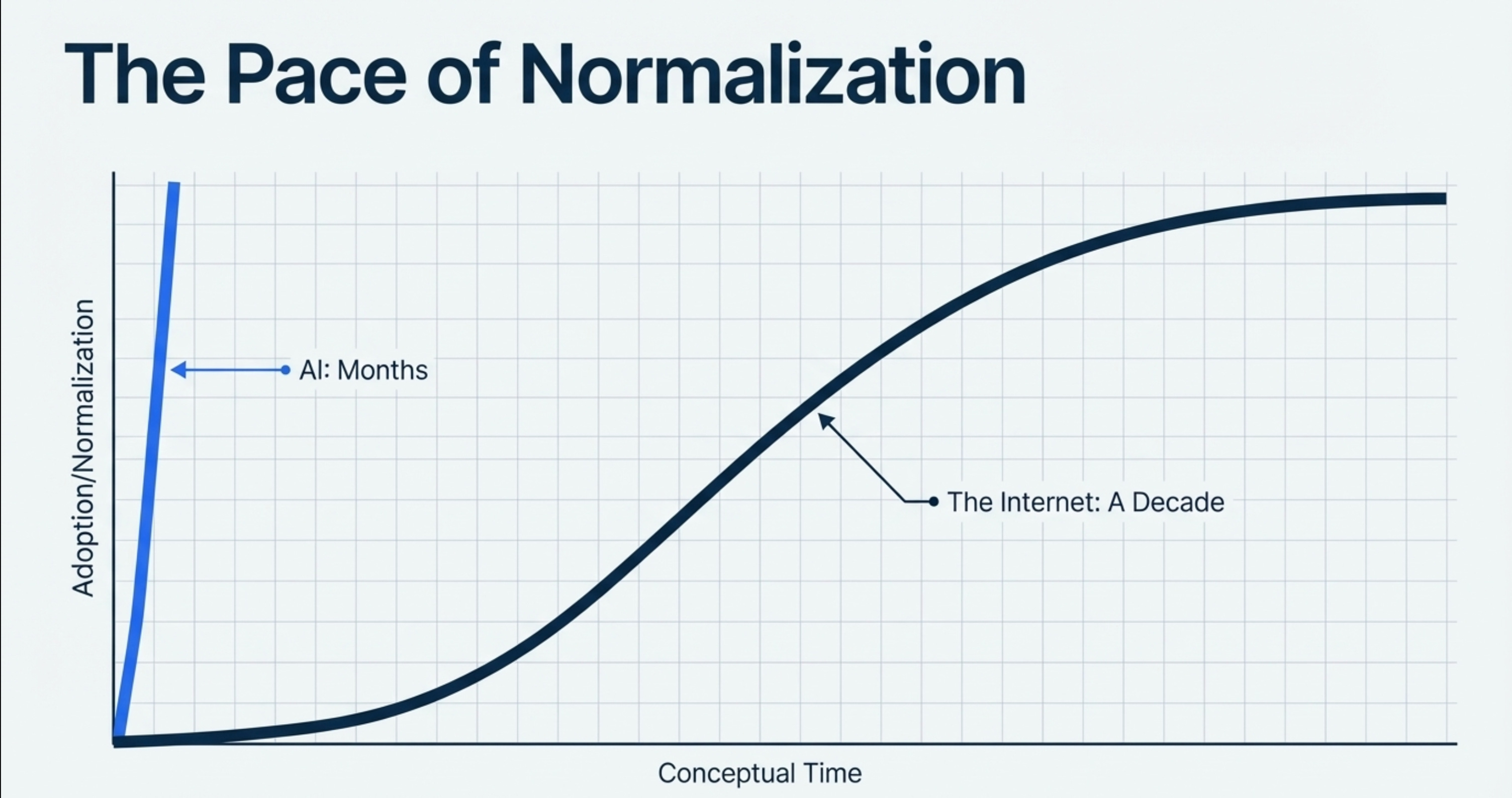
With AI, we are living that same moment today
I know some of you are rolling your eyese right now. You’ve heard the comparisons to AI and the internet and to AI and the printing press. It feels like every new technology gets called the “next internet” and most of them aren’t. For AI, I actually believe that it’s even bigger than the internet.
The difference isn’t the technology itself, it’s the pace of normalization and equalization. The internet took a decade to go from academic curiosity to commercial infrastructure. AI is moving in months (sometimes it feels like days). The organizations still asking “Should we allow this?” are already behind the organizations that moved past that question two or three years ago.
I’ve watched this play out in real time. I spend a good bit of time every day watching what’s happening with AI. We are at the point today where,
One person with a laptop and fluency in AI tools is outpacing entire departments or even companies.
How do these people do this? It’s not because they’re smarter. It’s because they stopped waiting for permission and started building. It’s also that they bring a level of expertise to the AI. Don’t buy the hype that anyone can do anything. You still need to have a level of knowledge, but with the right environment, a subject matter expert can multiply themselves many times over.
The NSFNET gatekeepers
They weren’t wrong to want guardrails because security mattered and misuse was a real concern. The people who built that network had poured years of work into it, and they didn’t want it compromised by commercial interests that had no stake in what they’d built.
The NSFNET gatekeepers were asking the right questions at the wrong moment in time.
The moment had already shifted. Commerce was coming regardless of what they felt or they believed. Their efforts to control the internet were now futile. The only real choice was whether they had was to shape it or be shaped by it. To do nothing meant they would be shaped by it.
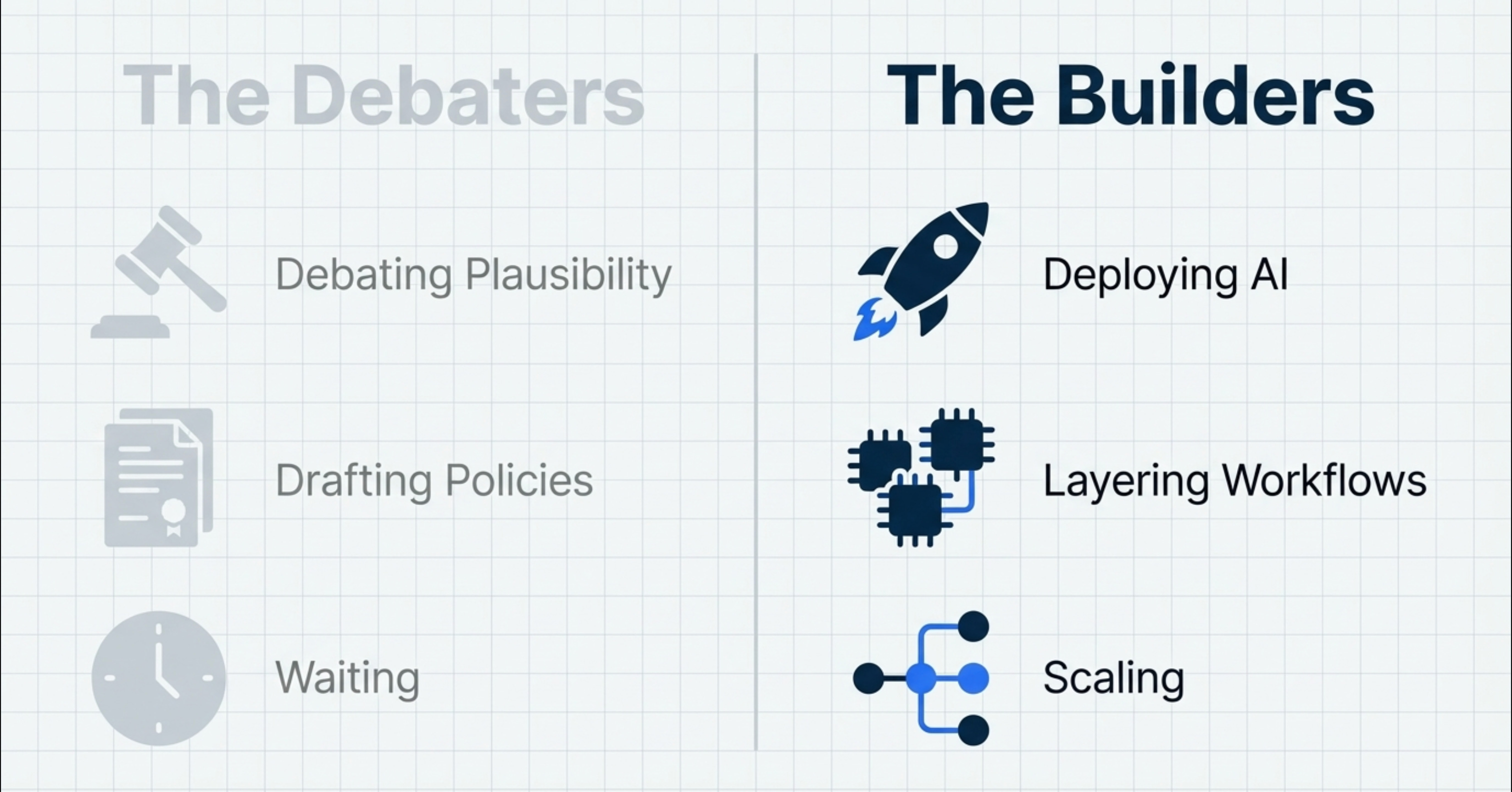
Faith-based organizations are in the same position right now. The governance questions are real and ethics matter. Data protection for vulnerable populations matters enormously. Faith-based organizations should take that more seriously than other organanizations. As I’ve said before, governance is not the same as paralysis. Writing an acceptable use policy is not the same as building solutions.
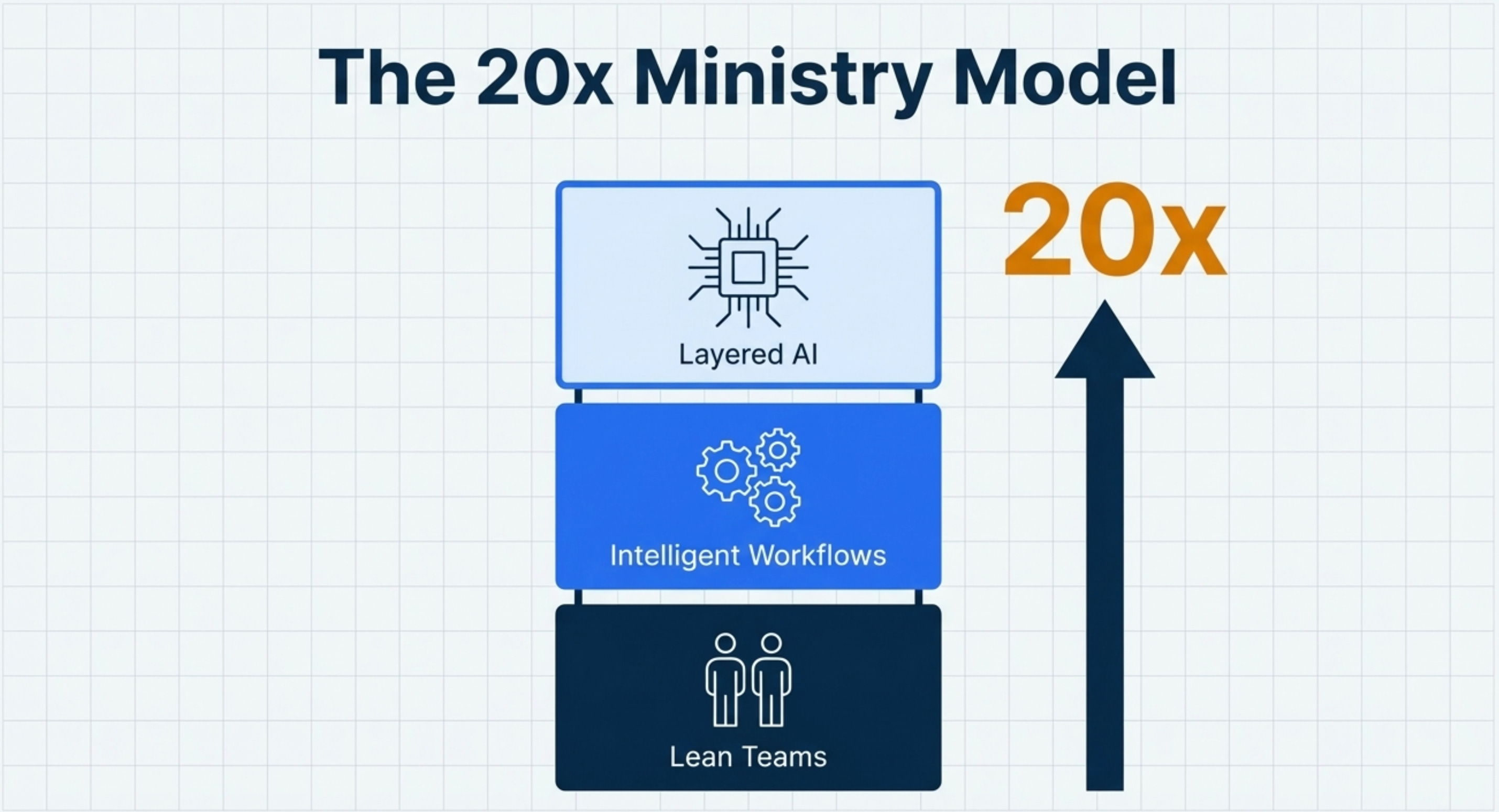
The organizations that figure out the 20x ministry model first (lean teams, intelligent workflows, and AI layered into every process that doesn’t require a human) are going to have a reach and an impact that look completely different from organizations still debating whether AI belongs in their work.
Fast Forward
Thirty-five years from now, someone is going to write an article like this one about the 2020s. They’ll shake their head at the organizationss that were still commissioning working groups on AI plausibility while others were already deploying it. They’ll wonder how that people in serious organizations spent serious time arguing about whether AI had any place in their work.
And they’ll ask the same question we now ask about pre-commercial internet:
How did you ever do ________ without AI?
That question is coming whether people want to hear it or not. The only real choice is whether you’re building the answer now or scrambling to catch up when everyone else already has.
The NSFNET gatekeepers eventually opened the gates and commerce flooded through because the demand was already there. It just needed permission.
How does this apply to us? We have more tools than any generation of mission workers in history. The Great Commission hasn’t changed but the capacity of the people carrying it is about to. Workers are being freed from the mundane and tedious administrative work to do the things they are called to do. They are being freed to do the human tasks while machines are doing the machine tasks.
How will you respond?
When the history of this moment gets written, which side of the story are you on?