


Every organization has a story it tells about itself.
We’re innovative. We’re mission-driven. We make decisions based on evidence. We listen well. We’re willing to change when the data says we should.
That’s the story many organizations tell themselves. It shows up in the annual reports and strategic plans. It’s a good story. Organizational bias doesn’t announce itself. People telling the story are not dishonest and they aren’t intentionally telling glory stories. These stories don’t show up in the meeting agenda, annual proposals, or evaluation rubrics (if they even exist). The organizational biases lives underneath all of those things.
Organizational biases are the deeply held assumptions embedded in the culture that nobody thinks to question them anymore.
Most people never see these biases. In many organizations, these biases are doing the most damage because people stop asking questions.
I’ve worked with and studied dozens of faith based and secular organizations. I’ve identified four recurring biases holding many organizations back. Great organizations find ways to intentionally challenge their biases.
The Founding Shadow
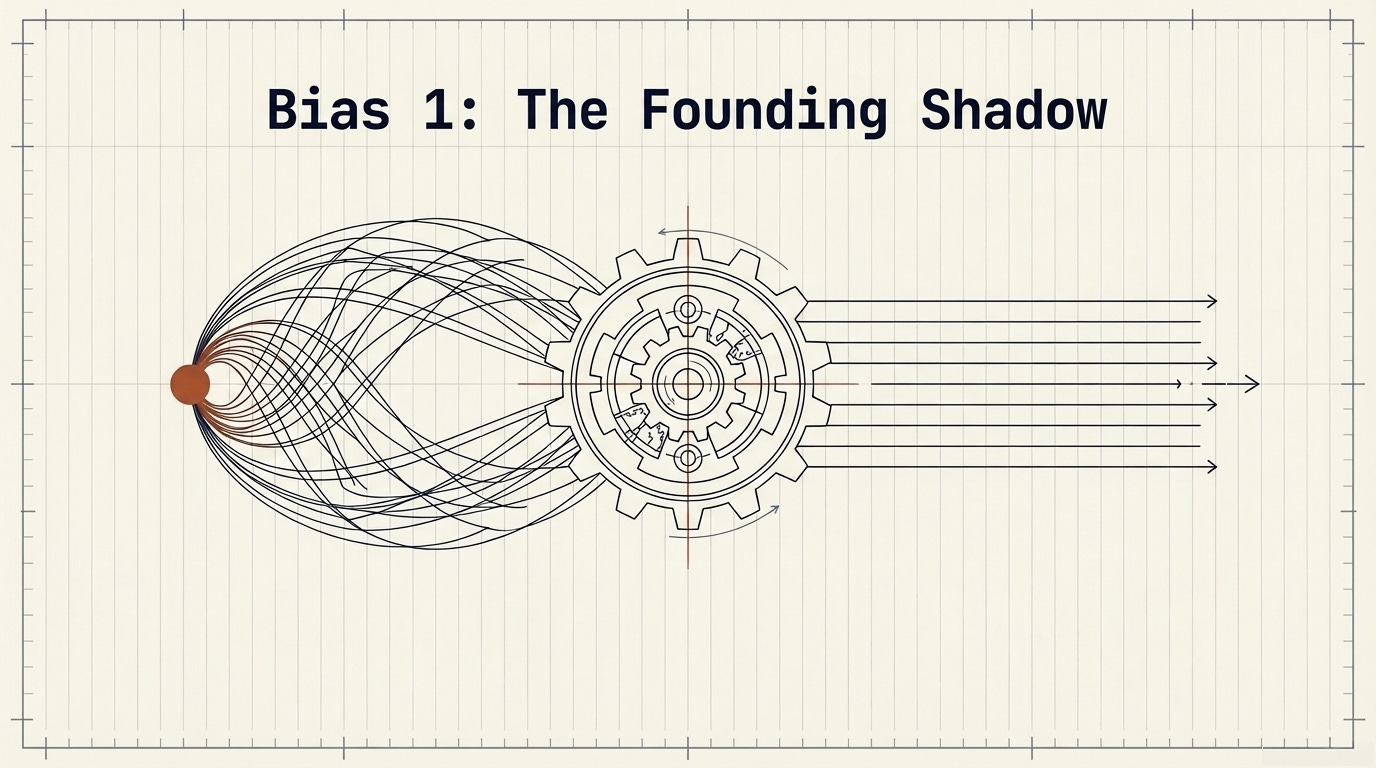
Many organizations were built around a founding vision, a founding leader, or a founding method. Decades later, that shadow still falls across every major decision of the organization. Proposals that align with the founder’s approach get warmth. Proposals that challenge it get friction. This isn’t because anyone consciously does this, but because the culture has absorbed the founder’s assumptions so completely that questioning them feels like questioning the mission itself.
Over time the founding principles slowly shift from being a way that worked to being the way it must be done. The distinction is subtle but important. Methods that once served the mission begin to function like guardrails around imagination. Leaders may sincerely believe they are protecting the mission when, in reality, they are protecting the familiarity of the past. Honoring a founding vision is good stewardship. Freezing a founding method in place can quietly prevent the organization from adapting to the future.
Blockbuster is a familiar reminder of what happens when yesterday’s winning model quietly becomes tomorrow’s blind spot. History is full of organizations that confused protecting their method with protecting their mission.
The Spiritual Legitimacy Bias
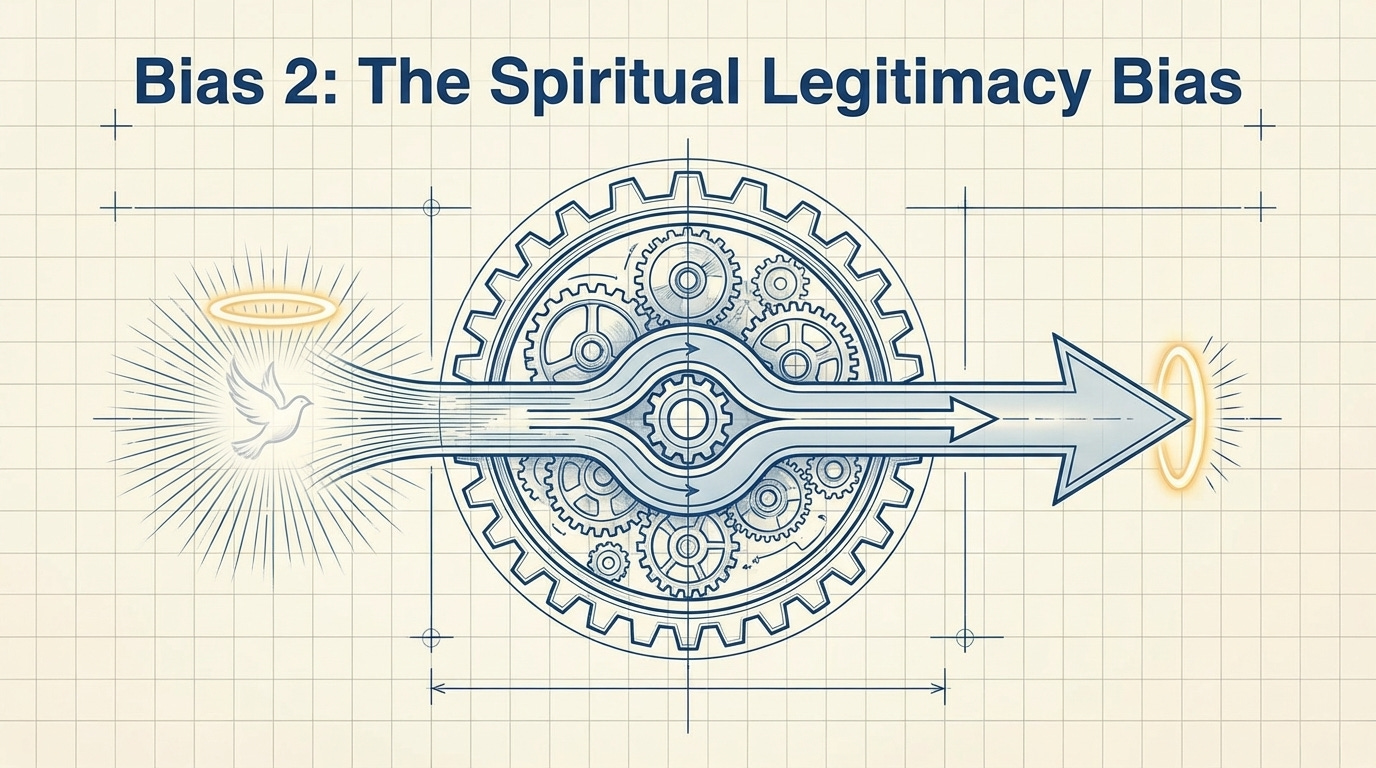
In faith-based organizations, ideas that come wrapped in theological language or spiritual experience sometimes carry disproportionate weight. How can you be critical of an idea that’s backed by prayer or a compelling sense of calling? Unfortunately, these ideas often bypass the analytical rigor that the same proposal would face if it arrived through a strategic planning process.
For Christians, spiritual discernment matters. While I believe it’s crucial, it must not create create a blind spot where emotionally compelling ideas escape the scrutiny they deserve.
Prayer and a clear sense of calling must inform strategic decisions, but it doesn’t mean the plans do not require analysis.
The Anecdote Over Data Bias
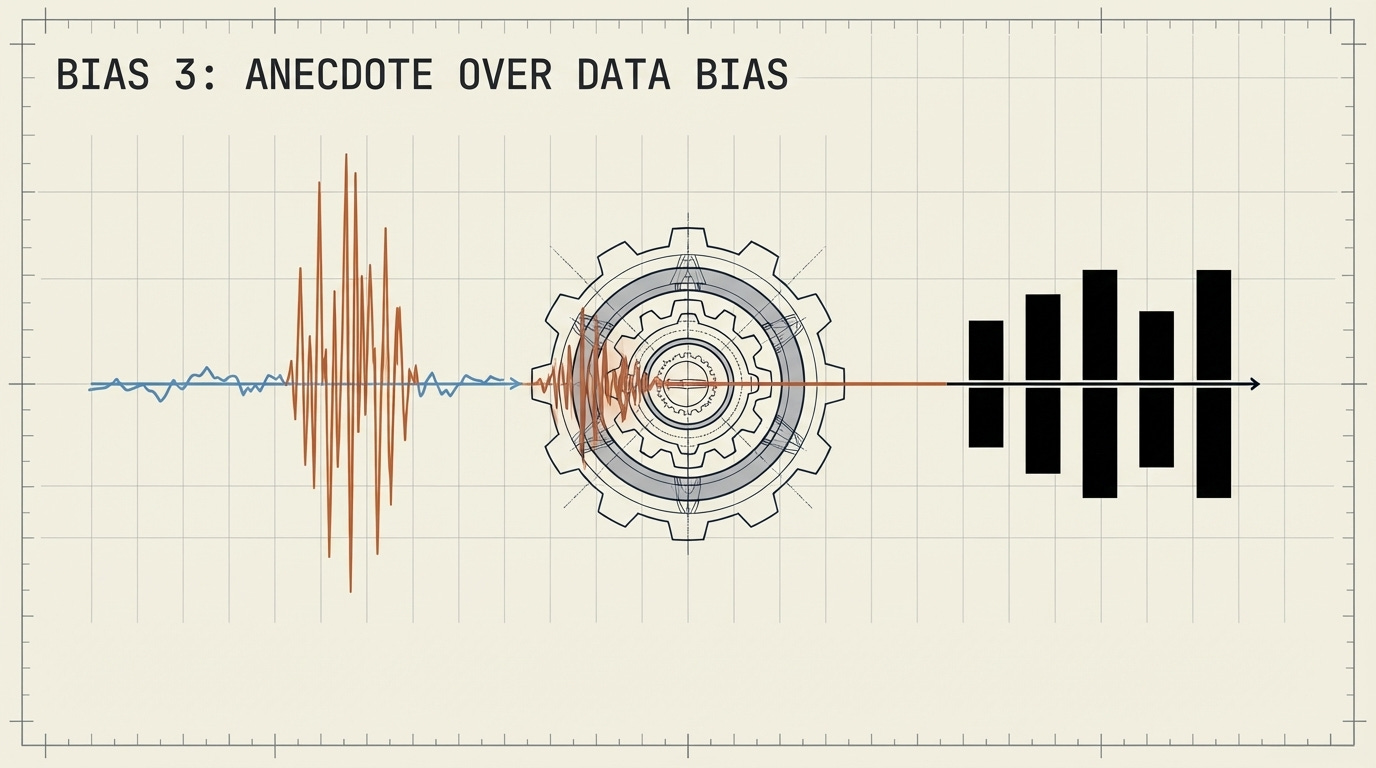
Ministry cultures are story cultures. I love this because stories are powerful, but it means that one powerful testimony sometimes outweighs a pattern of contradictory evidence. One successful story can sustain a failing program for years because the story is vivid and the data is abstract. One of my favorite leaders that I ever worked with called this phenomenon, “the glory story.”
The organization keeps funding what it can feel, and stops asking whether what it can measure is pointing somewhere else. Organizations making decisions based upon anecdotes must move past the glory story and move towards making decisions prayerfully informated by the data.
The Stability Illusion
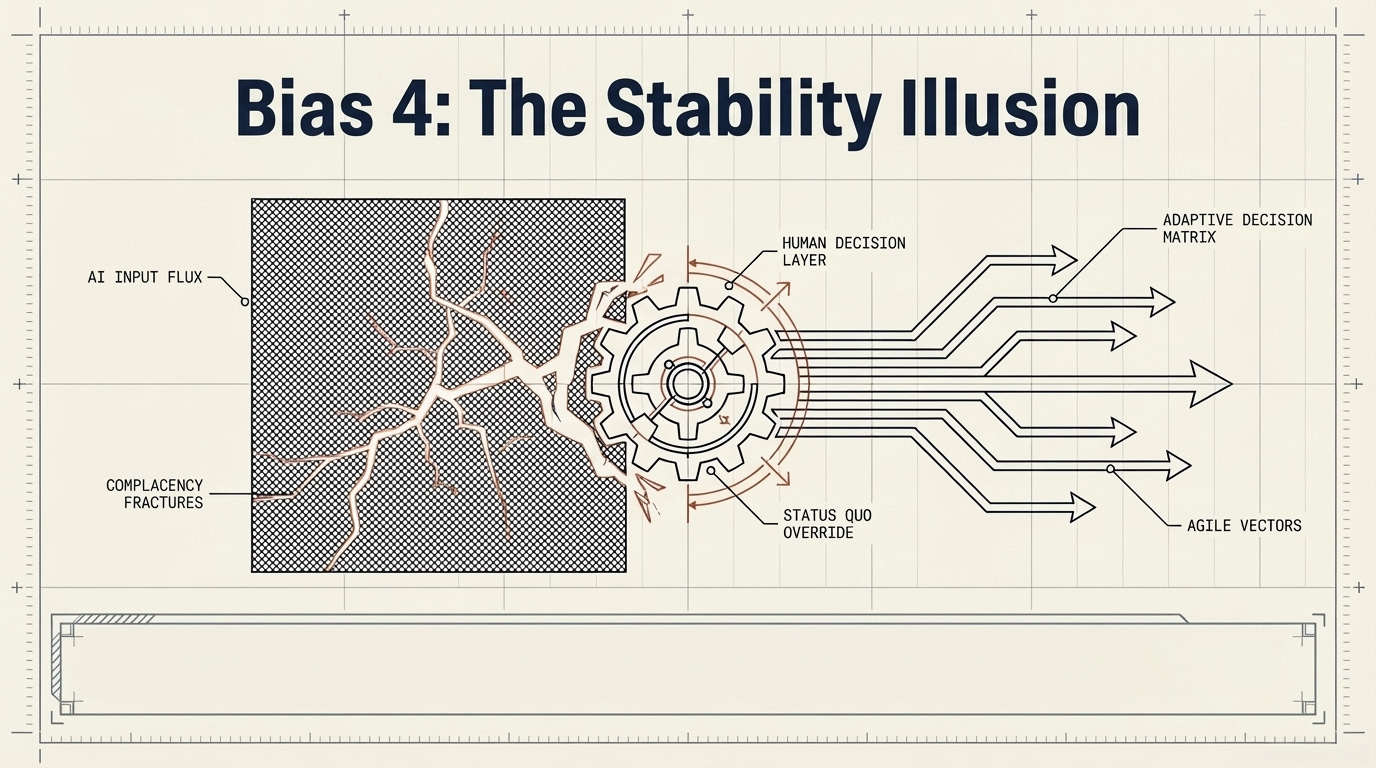
Organizations that have survived for a long time develop a quiet confidence that they’ll continue to survive. This is the sometimes the “too large to fail” model. The longer the track record, the stronger the illusion. This produces a bias toward the status quo that looks like prudence but functions like complacency. Change feels risky. Staying the course feels safe. Even when the evidence suggests the opposite.
Longevity can become a kind of proof that the current model must be working. Past success can lead to a bias that the organization has figured out the formula for the future. The conditions that produced past success rarely stay the same. Markets shift, technology creates disruption, and culture is always evolving. When organizations assume tomorrow will look like yesterday, stability stops being a strength and becomes a blind spot.
AI doesn’t share your biases.
AI doesn’t know your founder, it doesn’t feel the pull of a compelling testimony, and it doesn’t have a stake in maintaining the status quo. It simply responds to the logic, the data, and the question you ask it. That’s an enormous feature of AI, not a bug.
When you bring AI into your strategy process as a genuine thought partner, not just a content generator, it has an uncanny tendency to ask the questions organizational culture has been unconsciously avoiding. It surfaces the assumptions underneath the proposal. It generates alternatives never considered because the team’s imagination was constrained by the same biases the organizational culture produces.
Imagine this… You build a strategy that feels solid. You’ve thought it through and you’re confident in your plans. You run your strategy through AI with an invitation to challenge it. AI finds the crack in the foundation you were standing on without realizing it.
While this creates some uncomfortable moments, it’s invaluable. It’s this practice that separates the AI-Driven Organization from other organizations.
Critical nuance
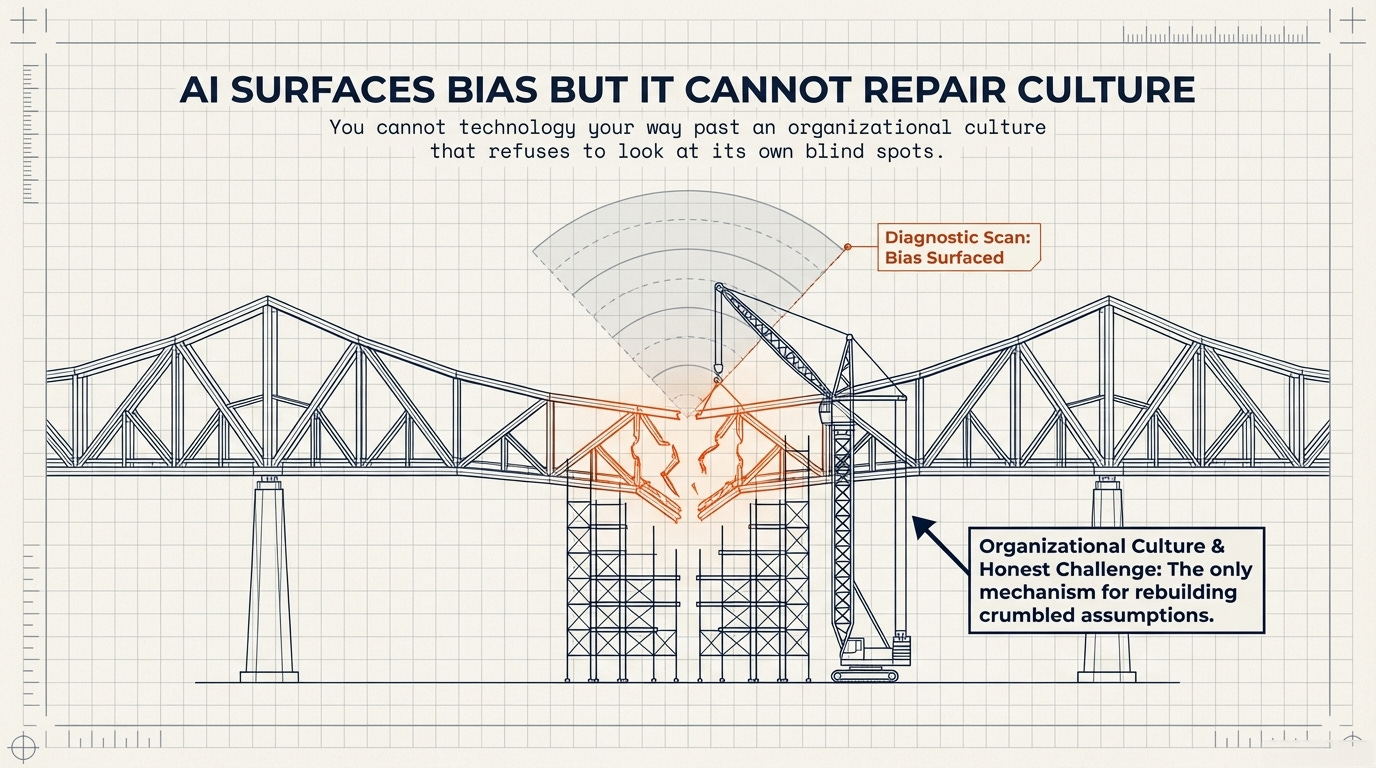
If organizations don’t have a genuine commitment to honest challenge and continuous improvement or if the response to an uncomfortable finding is to dismiss it, reframe it, or quietly ignore it, then AI becomes just another tool for producing more justifications for decisions that were already made.
AI can surface bias, but it can’t fix culture.
The CRIT framework from Article 4 only works if the organization is actually willing to act on what it finds. The assumption-challenging only matters if the assumptions that crumble are actually rebuilt. The bias-surfacing only helps if the organizational culture is secure enough to say “we were wrong about this” and change course. This is where the culture piece becomes non-negotiable.
You cannot technology your way past a culture that doesn’t want to see its own blind spots.
The question isn’t whether AI can find your biases. It can. The question is whether you’re willing to invite AI into your planning and decision making.
Practical Challenge:
Start with a recent major decision you’ve made. Hopefully it’s something significant enough that it shaped resources, priorities, or direction. Then run it through this sequence with AI:
Here is the decision we made and the reasoning behind it.
What assumptions did we make that we may not have examined?What evidence might exist that would complicate or contradict our reasoning?What biases — organizational, cultural, or cognitive — might have influenced how we framed the question?”
Consider the output. Not defensively, but with curiousity.
You won’t agree with everything AI surfaces. Most certainly some of the feedback will be off-base, but some of it will be spot on. The things that land will be worth more than the discomfort they cause.
Do this regularly. Build it into your planning cycles. Make it part of how your organization learns. The more the AI tools you use understand you, your organization, mission, vision, and culture, the better the feedback will become.
The AI-driven organization doesn’t just use AI to see further. It uses AI to see clearly and honestly. Honest sight, in an organization willing to act on it, is one of the most powerful forces for transformation available to us.
Article 7 of 10 in “The AI-Driven Organization” series. Next up: When Human Irreplaceable Meets Artificial Intelligence — defining what only humans can do, and why protecting that space is the most important leadership task of this moment.