


The Elimination Project, Part 4. The single largest unconsidered consumer of your attention. Apply the needle test to your inbox and watch most of it fall away.
If you haven’t read Part 1, start there. The whole series rests on knowing what your work is supposed to move.
Yesterday’s piece on Unsubscribing from email lists was the warm-up for today. Sort your deleted folder. Spend 30 minutes unsubscribing. The result was an immediate volume drop and a quieter inbox. If you did the work, your email is already cleaner today than it was yesterday.
Today we are going to do a bigger audit of email.
Subscriptions handled the easy category. It wiped out the automated mail you never asked for (or you don’t remembe raskign for). What remains is the harder stuff. The actual messages from actual humans about actual work. The inbox you can’t unsubscribe from because the senders are your colleagues, your customers, your team, your supporters, etc... The mass of email that’s technically real and yet, when you look at it honestly, is mostly not advancing anything you really care about. It’s not moving the needle.
Time to apply the needle test to these emails as well.
The Volume Trap
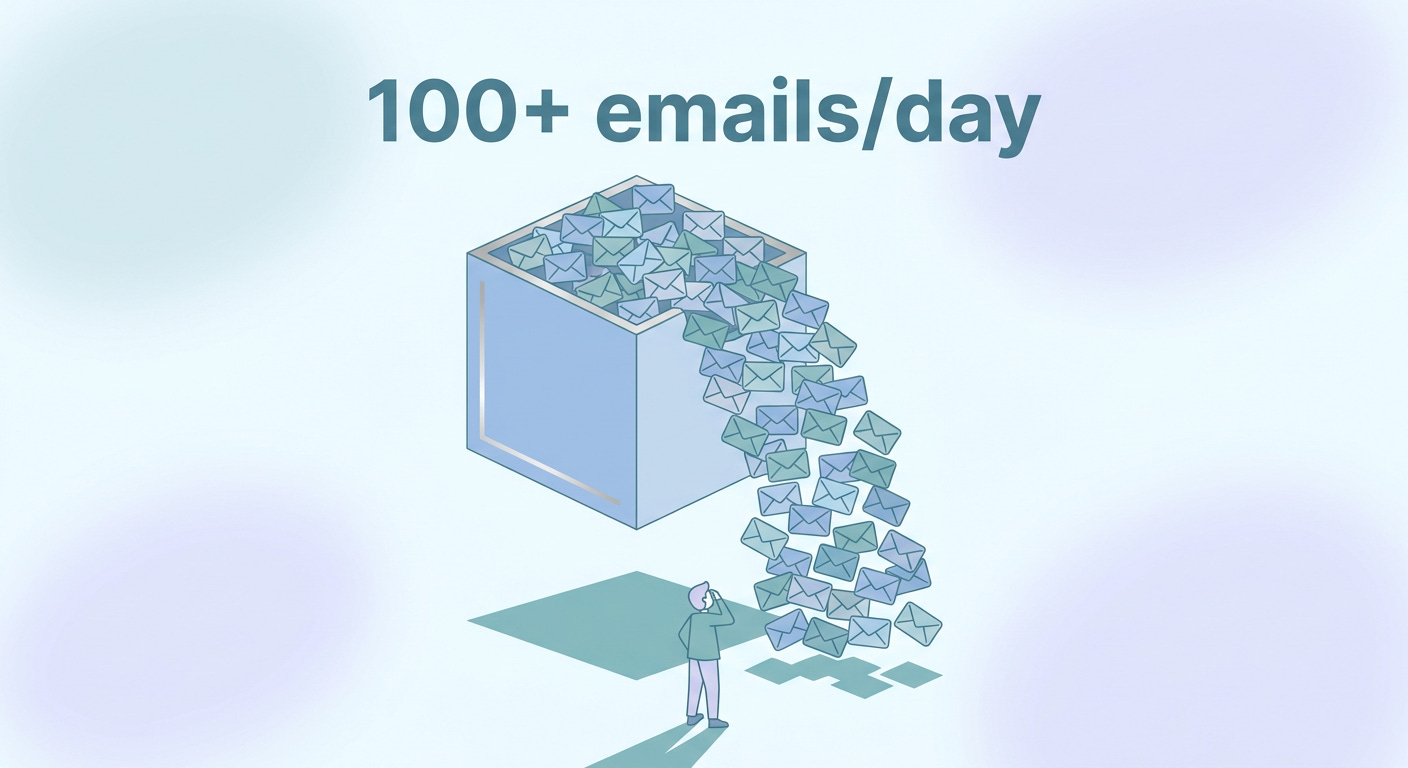
The average knowledge worker sends and receives over 100 emails a day. A leader at scale receives more. The hours spent in the inbox, every week, are real. For most of us, those hours are second only to meetings as a consumer of the work week.
When most of us feel the email crush, our instinct is to find tools that help us go faster. AI drafts. AI triage. AI summarization. AI sorting. AI auto-replies. The marketing copy for these tools sounds great. The promise is “do email faster, get more time back.”
That promise is a trap if you haven’t done the needle work first. Faster email in service of unmeasured activity is just faster activity. Let’s say you actually hit inbox zero by 9:30 AM. You likely still have no idea whether you moved anything that matters.
Speed isn’t the answer to the email problem. Discrimination is. Most of your email isn’t actually trying to advance your needle. It’s trying to advance someone else’s, or trying to perform responsiveness, or trying to keep itself alive through email ritual. The work is to see which is which and stop processing the rest.
Five Categories
Open your inbox right now and walk through the last 30 days of messages. Every email you’ve received fits into one of five categories.
Category 1: Email that advances the needle directly.
A message from a colleague making a real decision on the work that matters. A donor reply on a strategic conversation. A field worker raising a problem only I can solve. These are rare. They deserve full attention and a thoughtful response. AI is mostly the wrong tool for this category, because the response is where the real work happens.
Category 2: Email that surfaces information I need to do the needle work.
Updates from the team, intelligence from partners, signal from the field. AI is excellent at compressing this category. Summarize the digest. Surface what’s new. Flag what needs my attention. This is where AI saves real time.
Category 3: Email that exists because someone wanted to feel responsive.
Status updates I didn’t ask for. Long replies to my one-line questions. CCs on threads I didn’t need to be on. Replies that say “thanks!” on a thread that was already closed. This is where the elimination work happens. Not “respond faster.” Stop being on the threads at all.
Category 4: Email that exists because the sender wanted my approval.
Some of this is real, but if we’re honest, much of it is rubber-stamp. AI can pre-screen the rubber-stamps and just send them through, leaving you only the ones that actually require judgment. Better still, redesign the workflow so the rubber-stamps don’t reach you in the first place. Build a better process!
Category 5: Email that exists because of automation, subscription, or accident.
Newsletters, vendor updates, spam notifications, “in case you missed it” digests. If you did the Part 3 audit, this category should already be dramatically smaller. If you skipped Part 3, go back and do it now. That 30 minutes is the prerequisite for everything in this piece.
For most of you, the breakdown after the Part 3 cleanup will be roughly: Category 1 around 5%, Category 2 maybe 15%, and the rest some mix of 3 and 4 (with Category 5 mostly already cut). Sixty to eighty percent of what remains isn’t advancing your needle. It’s consuming the attention you would have used to advance it.
Once you see that breakdown, the elimination strategy writes itself.
What to Eliminate, in Order
Here’s the order I would attack what’s left.
Start with Category 4 — the rubber-stamp approvals.
Walk through your standing approval chains and ask which ones you’re actually evaluating versus which ones you’re rubber-stamping. The rubber-stamps either need to be redesigned (so they no longer come to you) or automated (so they go through without your touch). If you’re not adding judgment, you’re not adding value. You’re adding latency. Approvals are getting their own deeper treatment in Parts 6 and 7. For now, just notice how much of your inbox is approval theater.
Then attack Category 3. I call this the responsiveness theater.
This is the hardest one because it’s cultural. The “thanks!” reply, the “just looping you in,” the CC-everyone reflex. You can’t fix this for your whole organization in a week. You can fix it for yourself by being explicit. Tell your team you don’t need to be CCd on threads where you’re not making a decision. Tell them you don’t need acknowledgment replies. Model the behavior by sending fewer of them yourself.
For Category 2, the information surfacing. deploy AI.
This is where the AI tools earn their keep. Have an AI agent triage your inbox each morning. Surface the threads that need attention. Summarize the long ones. Flag the ones connected to your current priorities. Most modern email tools (Gmail with Gemini or Outlook with Copilot) can do meaningful versions of this today.
For Category 1, the email that actually matters. be a human. Read the message carefully. Write a thoughtful response. This is the work AI cannot do for you, and you’ll know which messages they are because they’re the ones connected to your needle.
The order matters. Start with Category 2 and deploy AI to triage and you’ll get faster at consuming the noise. but you won’t have eliminated any of it. Cut the volume first. Then the remaining email is the email that actually deserves your attention, and the AI tools become useful in service of the work that matters.

A Standing Rule for Your Inbox
Once you’ve done the audit, install a standing rule.
Before I respond to any email, I ask whether responding moves the needle. If the answer is no, I don’t respond.
This rule will feel rude the first week. It will feel disciplined the second week. By week four it’ll feel like the only way you’ve ever worked.
A few corollaries that follow from the rule.
You stop sending acknowledgment replies. The “thanks, got it” reply is itself a Category 3 email — except now you’re the sender. Just because you received an email doesn’t obligate you to write back.
You stop responding to threads where the only available action is to clarify a misunderstanding the original sender created. Send the question back to them. Don’t do their thinking for them.
You stop staying on CC chains where you have no decision to make. Reply once, asking to be removed. Better yet, don’t reply. Just filter the thread out of your inbox.
You stop writing 200-word emails when 20 will do. Some people write 2000-word emails… you know who they are. The recipients are also leaders trying to protect their attention. A short email respects them. A long email doesn’t.
These aren’t rudeness. They’re the disciplines of someone who actually has a needle and is trying to move it.
The Email That Is Really a Meeting in Slow Motion
One specific category breaks more leaders than any of the others, and it’s worth flagging before we close.
You know the threads I mean. The 14-message back-and-forth where four people reply-all over three days to settle something a one-page document would have closed in an hour. The thread that started as a simple question and became a slow-motion meeting nobody scheduled. The chain that ends with someone saying, “we should probably get on a call about this.”
Yes. You probably should have. Or better yet, you should have written the decision document first.
This is the inverse of the meeting elimination from Part 2. Sometimes the elimination move isn’t less synchronous communication, but more. A short, focused conversation can replace a week of slow email. Asynchronous isn’t always the answer. The answer is whichever format moves the needle fastest.
Stop and ask yourself, when an email thread is dragging: would 15 minutes of synchronous conversation, or one well-written decision document, end this faster? If yes, do that instead. Stop the email thread. Replace it.
One Take-away
Today, do this one thing.
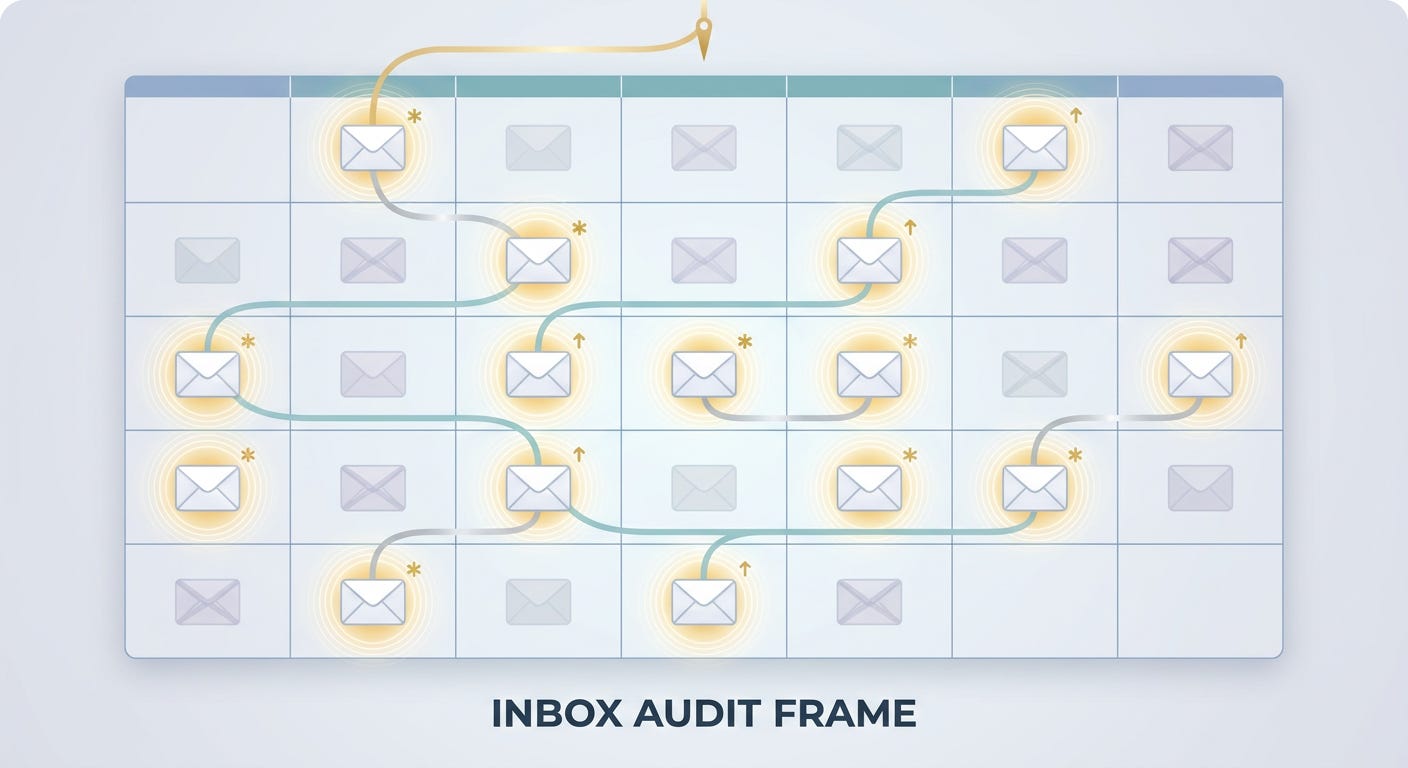
Run the inbox audit. Walk through the last month of email. Sort it into the five categories. Note the percentages. The numbers will surprise you.
Then write down, in a single sentence, the standing rule you’re going to apply going forward. Mine is I do not respond unless responding moves the needle. Yours might be different. The point is to make the rule explicit, to yourself, in writing.
Tell me what your audit revealed. Tell me what percentage of your inbox was actually connected to your needle. If the answer surprises you, you’re not alone. That surprise is the start of the work.
Justify everything you keep.
Eliminate everything else.
The needle decides what stays in your inbox, and what does not.
Thanks for reading AI, Innovation, and Faith! This is Part 4 of The Elimination Project. Part 1 (the manifesto), Part 2 (meetings), and Part 3 (subscription decay) build the foundation. Part 5 takes on status reports — the most expensive form of organizational theater.