


Ten articles about the AI-Driven Organization! We made it.
There were not just ten articles. They were ten invitations to have conversations about what it actually takes to build an organization that doesn’t just use AI, but is genuinely transformed by it. Over ten articles, I’ve talked about strategy and operations, thought partners and task robots, decision architecture and organizational bias, multiplying people and protecting the irreplaceable human work. We’ve talked about culture and the fact that none of this happens without the right culture. Culture is the thing that makes all the rest of it possible.
This is the last article in this series. I want to end it the way every good series should end, not with a tidy summary, but with a honest picture of what success actually looks like and a challenge worth sitting with.
Before I get there, I want to say something I don’t say enough publicly.
I am grateful beyond words to work at the International Mission Board.
Not because it’s a perfect organization, no organization is. But because it’s led by people who genuinely believe that every tool available to us should be deployed in service of the Great Commission. People who don’t just talk about innovation, they model it. Leaders who help build the framework that makes innovation possible.
Over two years ago, our President, Dr. Paul Chitwood, enrolled our entire leadership team in an AI course. He and our Vice Presidents went through the entire MIT AI course. The senior leadership of a 4,000-person global missions organization went through a course on AI. They did the assignments, watched the videos, submitted their papers, and learned about AI’s coming impact on organizations. That’s how to lead an organization into the future.
In most organizations, AI training gets delegated. It gets sent down the chain. The assumption for many organizations is that senior leaders set the vision and others are the learners. Dr. Chitwood not only rejected that assumption, he modeled the posture that Article 9 of this series argues is essential. Leaders go first.
I think about his decision often. Because of it, when our team brings AI proposals to the organization, we’re not translating across a comprehension gap to leaders. We’re building on a shared foundation. When we talk about governance, risk, and opportunity with our leaders, they understand what we’re talking about. They’ve done their homework (literally).
Having great leadership is a gift and I don’t take it for granted. If you’re reading this and your senior leadership hasn’t taken the time to become learners, this series is my invitation to them. Share the ten articles with them, not as a critique, but as the first step on the path to becoming an AI-Driven Organization.
What does the AI-driven organization actually look like?
Allow me to give you the real answer. Not the aspirational version.
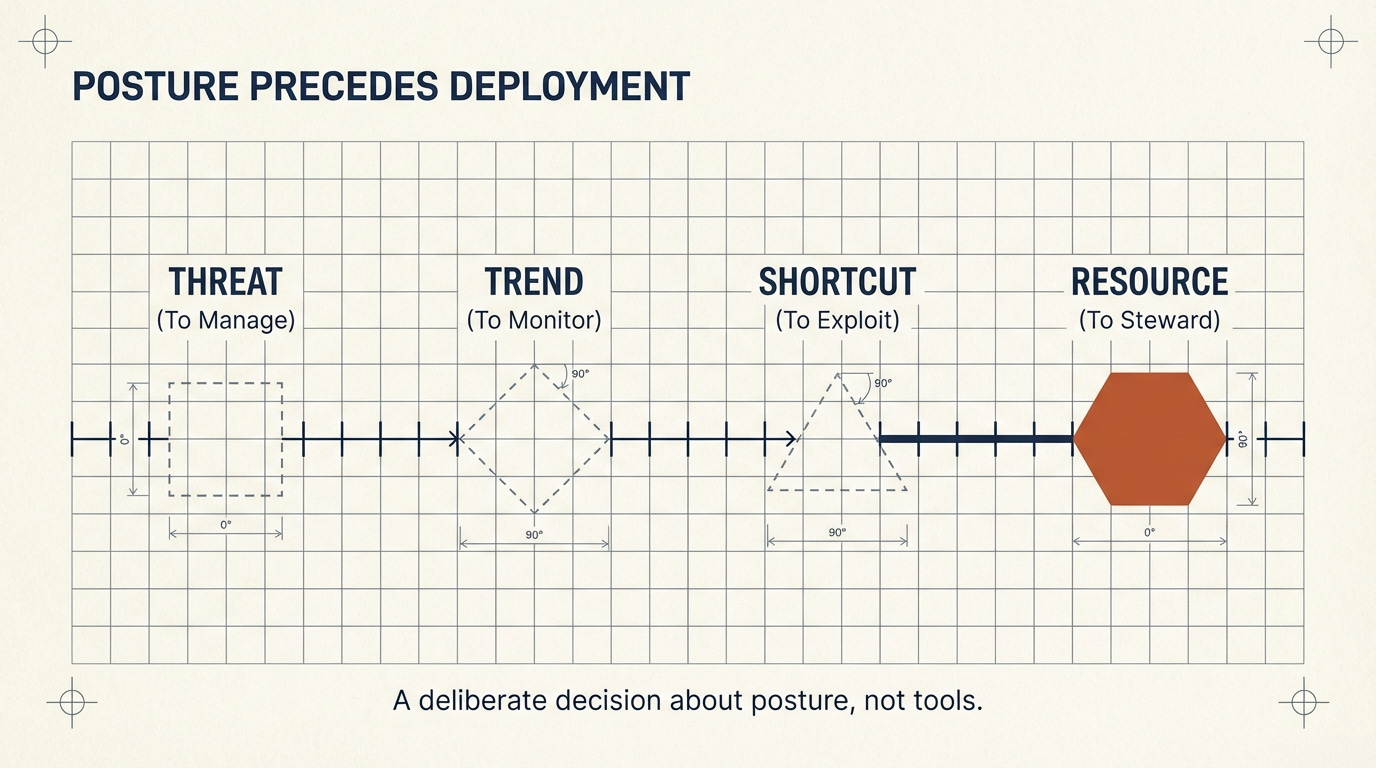
The AI-Driven Organization looks like an organization that has made a deliberate decision about posture, not about tools. A decision that AI is not a threat to manage, not a trend to monitor, and not a shortcut to exploit. AI is a resource to steward. One that, deployed with wisdom and intention, can multiply the capacity of every person in the organization to do the work they were called to do.
It looks like leaders who have done the learning themselves. Who can speak with credibility about what AI can and cannot do. Who model experimentation, acknowledge uncertainty, and create safety for their teams to try things and fail and try again.
It looks like a culture that has made the three shifts. 1) From control to empowerment, 2) From perfection to iteration, and 3) From stability to agility. This didn’t happen all at once. It certainly didn’t happen perfectly. These shifts occured both directionally and consistently. It’s a culture where the default is curiosity rather than caution. Where the question “should we?” has been replaced by “How might we?”
It looks like people who are more present in the irreplaceable human moments because the friction of the non-essential work has been cleared away. Field workers who have their time back. Leaders who can go deep because the mundane work is handled. Leaders who can think strategically because they’re no longer swallowed by operations.
It looks like decisions that get made well and on time because the information architecture supports clarity rather than confusion and the bias-surfacing is not only built into the process, it’s embraced. It’s an organization where the right people have the right authority to decide without everything traveling to the top.
It looks like small teams doing the work of large ones. This happens not because people are being squeezed harder, but because intelligence has been layered into the workflows, and the capacity that was always there has finally been released.
Here’s the part that probably will not sell any books.
The AI-driven organization is never finished. There is no version of this where you cross the finish line and declare transformation complete. The tools keep changing, the possibilities keep expanding, the cultural work keeps requiring attention, the biases keep needing to be surfaced, and the irreplaceable human work keeps needing to be protected. It' never stops.
The AI-Driven Organization is not a destination. It’s a direction.
The organizations that thrive in the years ahead won’t be the ones that figured out AI perfectly. They’ll be the ones that built the culture, the posture, and the leadership capacity to keep learning, keep adapting, and keep pointing everything, every tool, every process, and every efficiency gain back toward the mission.
Jesus sent twelve. Not twelve thousand. Not twelve hundred. Twelve ordinary people with no organizational infrastructure, no communications budget, no administrative support, and no technology beyond their own presence and the power of the Spirit.
They turned the world upside down.
We have more tools than any generation of mission workers in history. AI is the latest and most powerful of them. The question was never whether we’d have enough capacity. The question has always been whether we’d have the courage, the clarity, and the obedience to use what God has given us fully, without reservation, without the paralysis of over-caution, and without confusing our comfort with His calling.
The Great Commission hasn’t changed, but the capacity of the people carrying it is about to. Allow me to say something for the third time in this series.
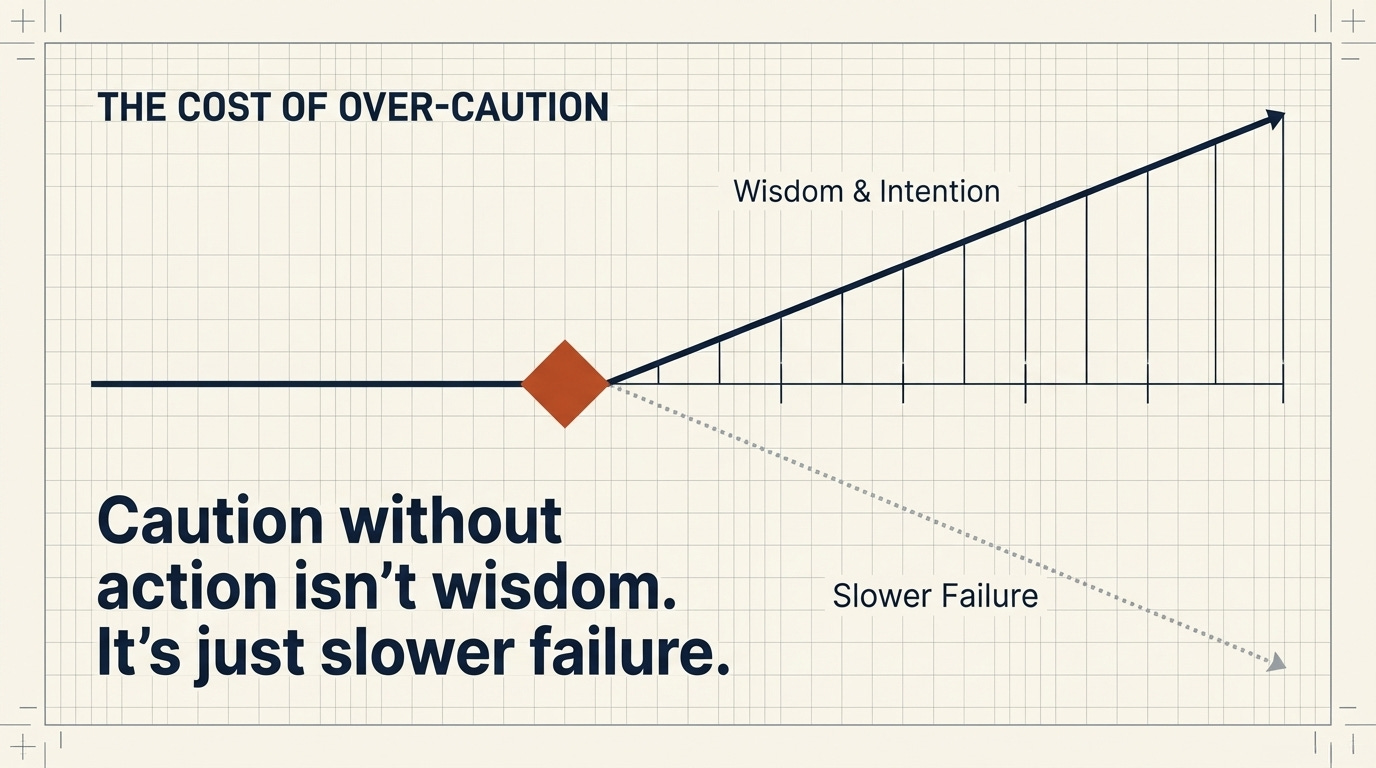
Caution without action isn’t wisdom. It’s just slower failure.
I hope this series has been helpful. This isNow go build something.
This has been “The AI-Driven Organization” — a 10-part series loosely based on Geoff Woods’ The AI-Driven Leader. I have applied his principles not to individual leaders, but to faith-based organizations. If this series has been useful to you, share it with a leader who needs it. And if you want to continue the conversation, find me at www.donbarger.com.