


Here’s the uncomfortable truth most people don’t want to hear:
We don’t have an AI problem. We have a strategy problem.
AI is just the thing that’s making the strategy problem impossible to ignore anymore.
For years, maybe decades. organizations have been running on good intentions, incremental improvements, and the quiet assumption that what got you here will get you there. Many have been managing operations instead of leading transformation. They’ve been measuring activity instead of impact and because of this, they’ve been confusing motion with progress.
And it worked. Until now.
Because now there’s a force in the room that doesn’t care about your org chart, your approval process, or the way you’ve always done it. AI doesn’t respect legacy. It doesn’t wait for committee approval. It doesn’t slow down because of corporate culture.
It just keeps moving and the organizations that figure this out, really figure it out, not just form a working group, are starting to pull away from the ones that don’t.
About a year ago, I picked up Geoff Woods’ The AI-Driven Leader and couldn’t put it down. Not because it was flashy or full of futurist hype, but because it was clarifying. Woods makes the case that the real problem isn’t a lack of AI tools. It’s that leaders are so buried in operations they can’t think strategically. AI, used well, is the thing that gets them out of the weeds.
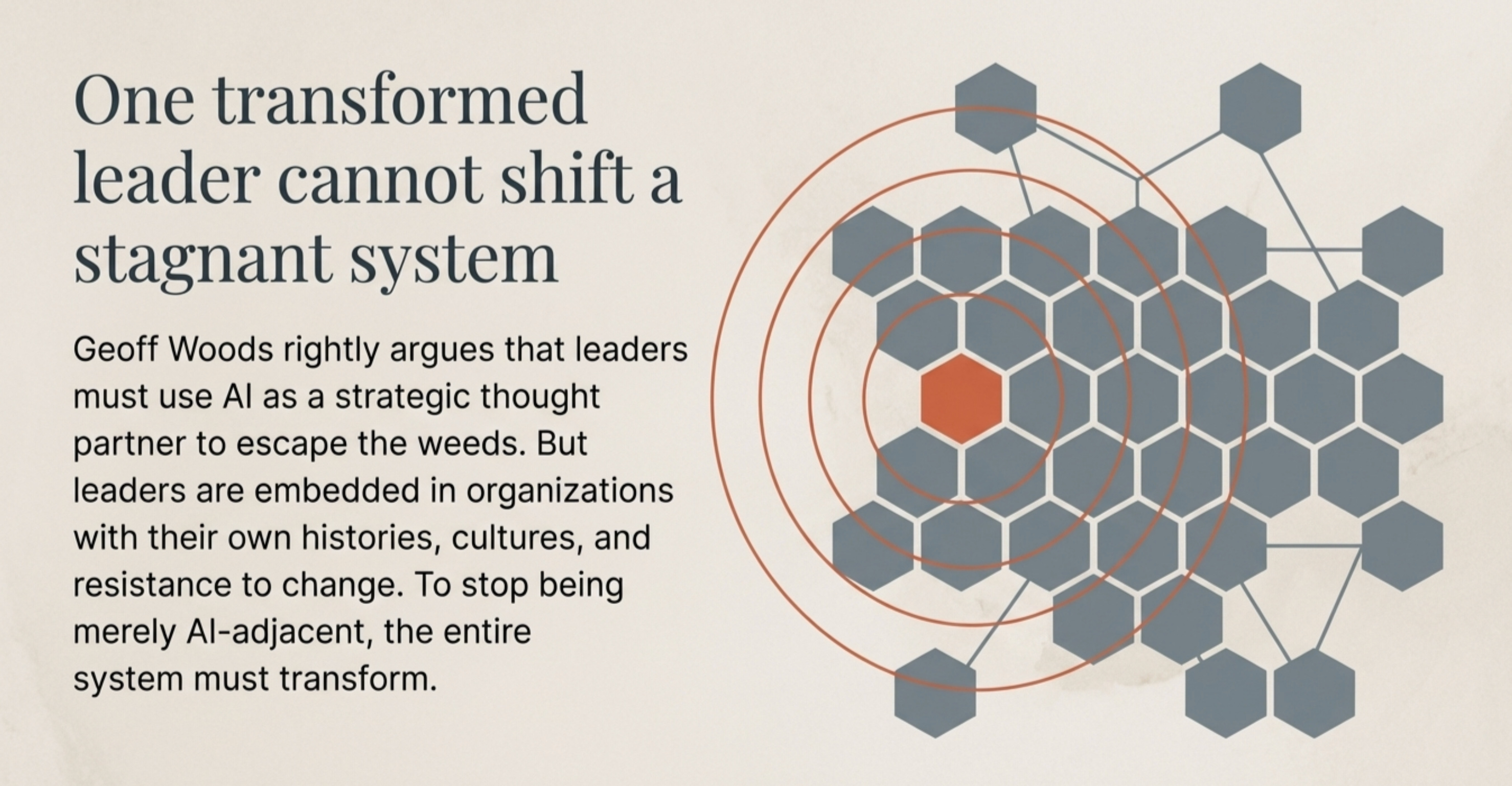
I kept turning pages and thinking, “This is exactly right… but it stops one level too soon.” Why? Because it’s not just leaders that need to change. Entire organizations need to change. We need to be asking the same questions from the book not just about leaders, but entire systems because leaders are embedded in organizations. These organizations have their own histories, cultures, convictions, and deeply held assumptions about how things should work. One leader isn’t going to change that. The entire system must change.
So, how do you apply this to a faith-based organization? If you haven’t read Woods’ book yet, grab a copy. It’s worth your time. This ten article series builds on it, but takes it somewhere he didn’t go
This isn’t a series about AI tools. I’m not going to give you a list of apps to download or prompts to copy and paste. There are plenty of newsletters for that. This is a series about organizational transformation. It’s about what has to change at the culture level, the decision-making level, and the people level, for an organization to actually become AI-driven rather than just AI-adjacent.
That’s what this series is about.
Over the next ten articles, we’re going to walk through what it actually looks like to build an AI-driven organization, not in theory, not in a Fortune 500 case study, but in the kinds of organizations many of us work in: churches, nonprofits, missions agencies and other faith-based institutions. These are organizations are unique. They have complicated cultures, limited budgets, and a deep sense of calling that sometimes gets tangled up with resistance to change.
Here’s how we get started with the series… What do organizations actually believe about AI?
Not what’s in the policy document or the acceptable use statement, not what does your leadership says about it, but what does the organizational culture believe?
I’ve had this discussion with over a hundred churches, non-profits, and even some higher ed institutions. Geoff Woods describes three categories of how leaders and AI. He’s spot on and I’ve observed same three types of organizations.
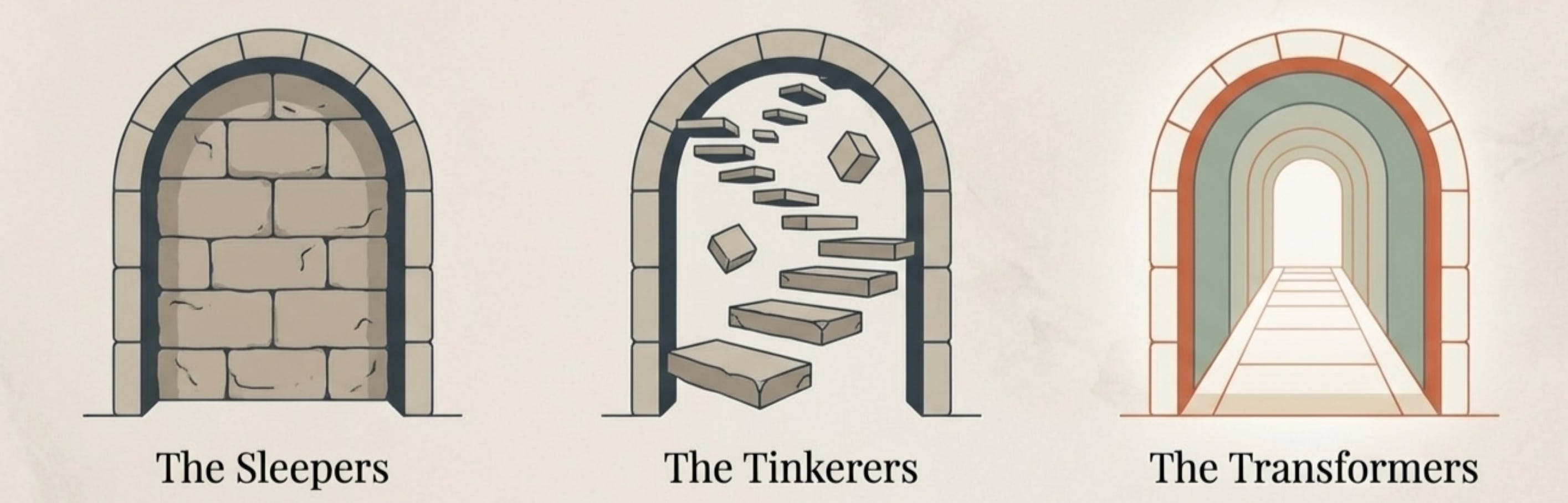
The Sleepers.
They know AI is happening. They’ve heard the statistics. They attended the webinars. But they’re waiting for clearer guidance, for better tools, and for someone else to go first. They’re not opposed to AI. They’re just not moving. Every month they wait, the gap widens.
The Tinkerers.
They’ve got a handful of early adopters running their own experiments. Someone in the marketing department uses ChatGPT, an accountant’s experimenting with copilot, and someone on the communications team is playing with image generators. It’s all individual, ad hoc, and disconnected from strategy. There’s no shared vision, no common language, and no organizational muscle being built. Just scattered sparks that never catch.
The Transformers.
They’ve decided to not just explore AI, they decided to become an AI-driven organization. They’re rebuilding decision-making processes, investing in people development, and asking hard questions about what the organization needs to look like in two years. They’re not chasing every new tool. They’re building something durable.
Most organizations are Sleepers or Tinkerers. A few are starting to become Transformers.
The gap between them is not technical. It’s not even financial.
The gap between the sleepers, tinkerers, and the transformers is a willingness to ask hard questions about the strategy, the culture, and the sacred cows.
I wrote recently about what I’m calling the 20x Ministry. It’s the idea that a small team, with AI layered into their workflows, can operate at the output level of a team twenty times its size. Not by burning people out and not by adding headcount, but by adding intelligence to every process that doesn’t require a human.
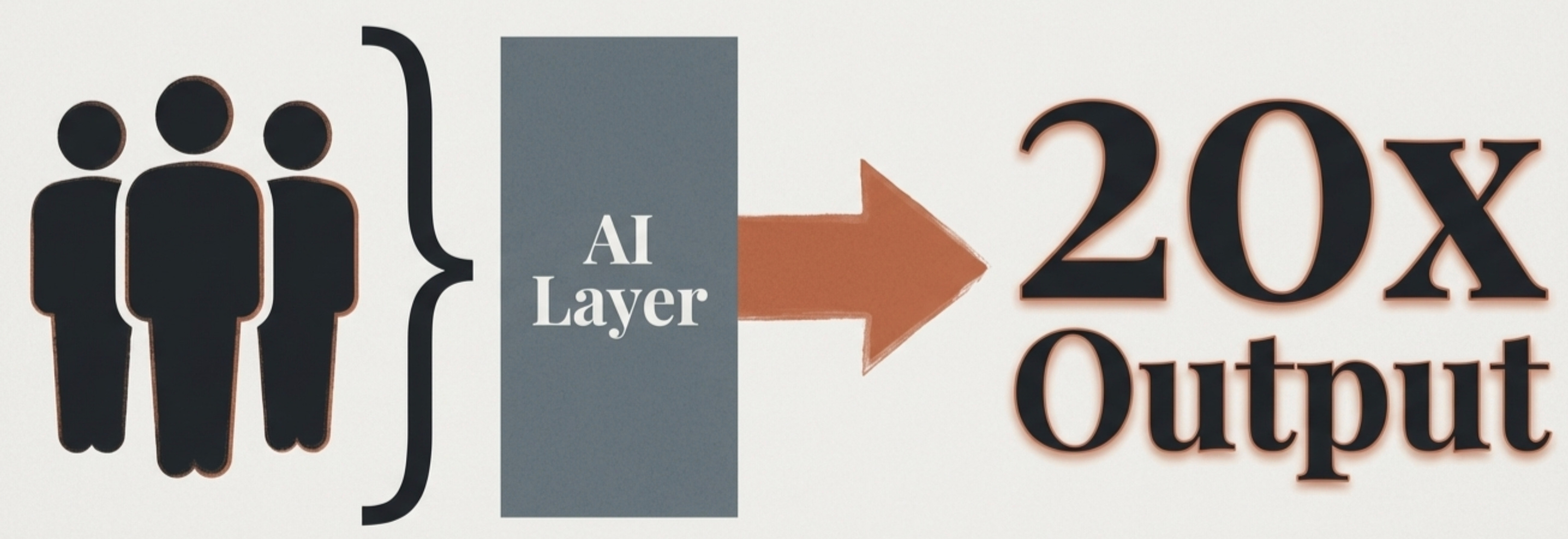
The startups doing this aren’t debating whether AI is a good idea. They moved past that question two years ago. They’re building and they’re building fast.
Here’s the uncomfortable parallel for many organizations. While they’ve been talking about AI, running cautious pilot programs, and forming working groups, or waiting… the gap between the sleepers and the transformers has been widening. Every week.
I said it in that article and I’ll say it again here.
Caution without action isn’t wisdom. It’s just slower failure.
The 20x organization doesn’t automate the human things. It removes everything that distracts from the human things. It clears the path so that the people who are called, gifted, and irreplaceable can actually do the irreplaceable work.
That’s the vision behind this series. Not AI for efficiency’s sake. AI for mission’s sake.
Here’s what I’ve learned from watching dozens of organizations navigate this moment and from living inside one that’s intentionally trying to be a transformer.
The organizations that transform don’t start with AI. They start with clarity.
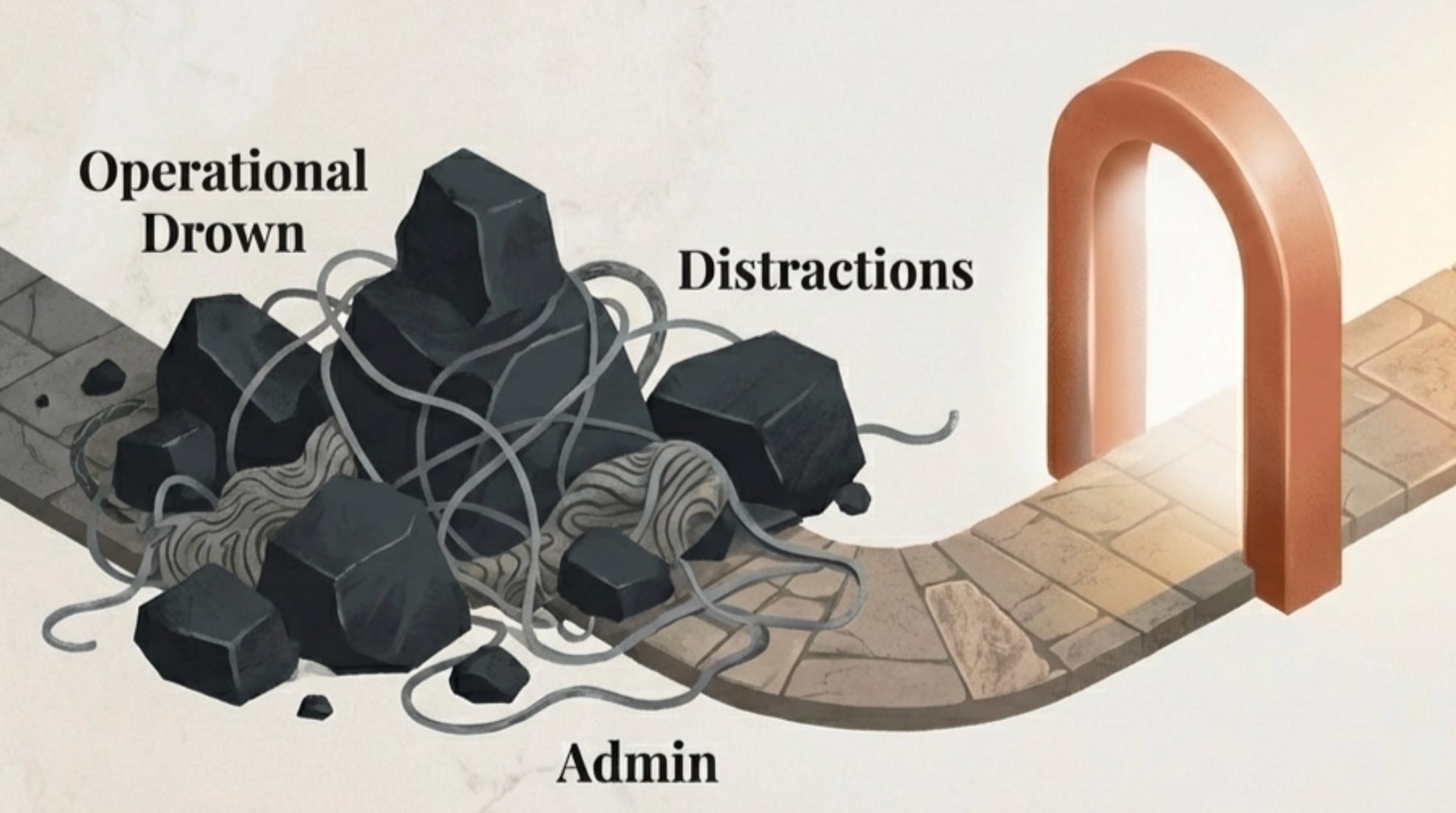
Clarity about their mission. Clarity about the gap between where they are and where they need to be. Clarity about what’s actually holding them back (which is almost never a lack of tools).
Woods puts it plainly: strategy first, technology second. The organizations that get this backwards, the ones that buy the tools and hope the strategy follows, are building on sand.
The AI-driven organization doesn’t use AI because it’s trendy. It uses AI because it has a vision worth accelerating, a mission worth multiplying, a Kingdom impact worth 20x-ing.
Tools don’t drive transformation. Clarity does.
Over the next nine articles, we’re going to get very practical. We’ll talk about escaping operational overwhelm at the organizational level. We’ll talk about building AI into your decision-making architecture, not just your task list. We’ll talk about multiplying your people, challenging your assumptions, and building a culture that can actually sustain this kind of change.
But none of that matters if the organization hasn’t woken up yet.
So here’s the question I leave you with, not as an abstract thought experiment, but as something worth bringing into your next leadership conversation:
Is your organization a Sleeper, a Tinkerer, or a Transformer?
Answering that question is where it starts.
This is Article 1 of 10 in “The AI-Driven Organization” series. Next up: Stop Drowning in Operations! Why strategic clarity has to come before any tool ever gets deployed.
This series is built on a simple but provocative idea: what if everything Geoff Woods argues in The AI-Driven Leader applied not just to individual leaders, but to entire organizations? Woods makes a compelling case that leaders who harness AI as a strategic thought partner — rather than just a productivity tool — can escape operational overwhelm and make faster, smarter decisions. He’s right. But leaders don’t exist in a vacuum. They lead organizations with their own cultures, histories, assumptions, and resistance to change. One transformed leader isn’t enough to move that. This series picks up where the book leaves off.
I am so excited for this series.
Thanks for the article. I look forward to the series!
One of my favorite open source and disruptive innovation thinkers is Simon Wardley. His Pioneers, Settlers and Town Planners article is over a decade old now but still shaping my thinking. Link: https://blog.gardeviance.org/2015/03/on-pioneers-settlers-town-planners-and.html
His model attempts to classify the types of innovation within different subcultures of an org rather than the org as a whole. One of the main thoughts is that each group is essential for disruptive innovation but has a different role. This pushed back against some of Gartner's Bimodal IT (Mode 1 vs Mode 2) content from around 2014 that was sometimes used to devalue entire organizations because they weren't "agile" enough.
I think Sleepers, Tinkerers and Transformers can be very useful for challenging our leadership teams to take a clear-eyed look at where we are and jump start a change. Can't wait to read more!