



Let me give you a number that will surprise you. It surprised me!
Only 8.5 percent of projects finish on time and on budget. I thought that the number would be low, but not that low. I was thinking like 25-30%, but that’s the finding from more than sixteen thousand projects across dozens of fields and countries compiled by researcher Bent Flyvbjerg in How Big Things Get Done.
After reading that, I actually feel pretty good about my projects. I can’t give you the number off hand, but I complete a lot more than 8.5% and almost all of them are under budget! Of course, most of the things that I work on are not as big as what Flyvbjerg studied.
Think about your last big project. Where did it land? Did it finish on time? Was it on budget? If not, well… your project reflects most big projects. Late and over budget!
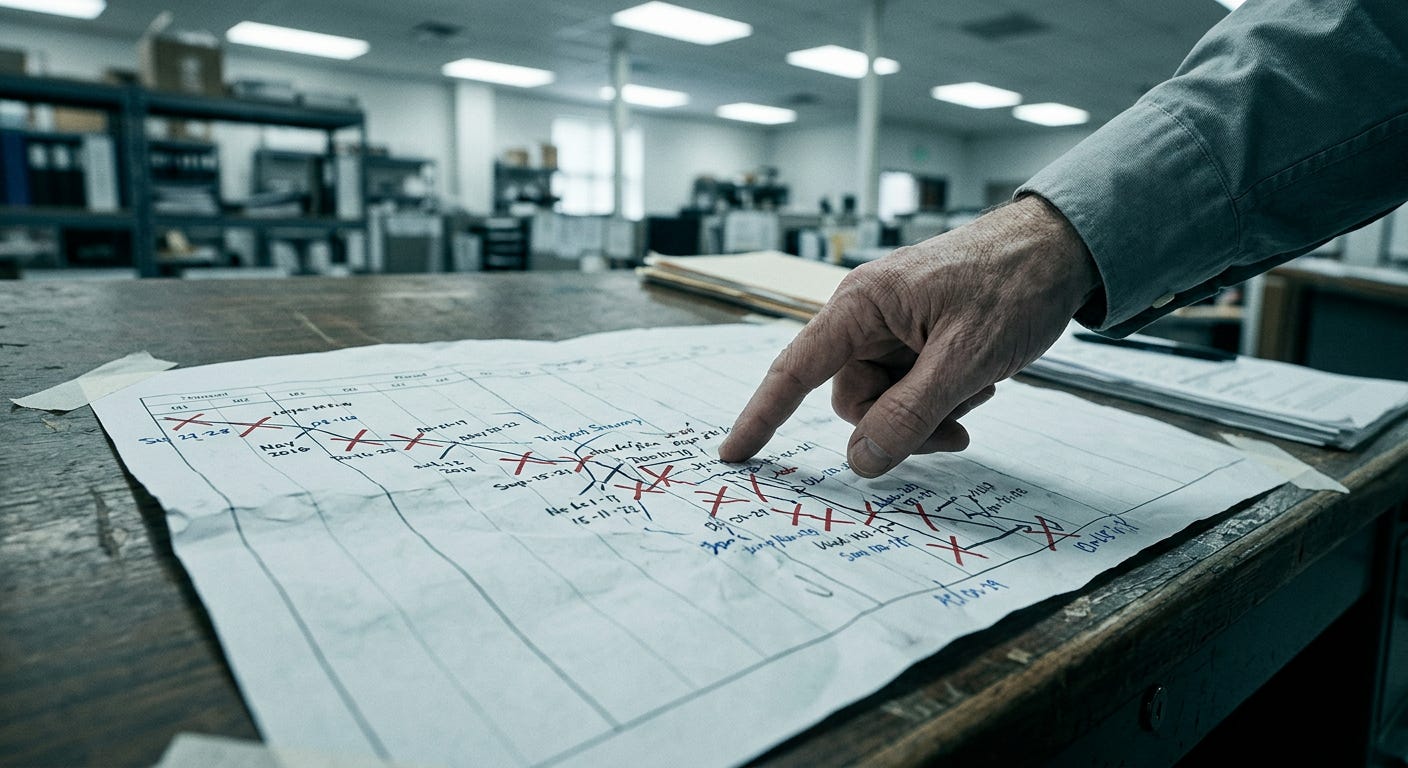
Why?
Actually, the cause is almost always the same. I’ve address this in other posts, but the challenge is that many leaders rush into action before the plan is ready. In all too many cases that I’ve observed, they often can’t really define the problem they are actually trying to solve before the rush off to solve it.
This isn’t because the leaders are reckless and don’t care. It’s because the pressure to show progress is substantial and the stakes for inactivity are significant. Stakeholders want movement. Donors want to see impact. Boards want momentum. Organizations reward action over deliberation.
This means that organizations often break ground early and launch before they’re actually ready. They start building before we’ve finished thinking. Then they spend the entire execution phase paying for every assumption they didn’t examine in planning. This usually costs orders of magnitude more than if they had caught it on paper before breaking ground on that new project.
Here’s some common sense that many (me included) often ignore. Planning is cheap. Execution is expensive. If you’ve ever used Claude Code, you know why there is a “plan” mode.
Every mistake you find in a model, a prototype, or a whiteboard session costs almost nothing to fix. The same mistake discovered mid-build or mid-rollout can cost everything.
The innovator’s instinct is to move fast and iterate in production. It’s actually how I operate most of the time. It’s the perfect choice for projects of high reward and low exposure. It’s great for small projects that you can later scale.
It is exactly wrong for big ones. You don’t want to be iterating while building a nuclear power plant.

Start at the end.
Before you assign a single resource and before you schedule a single kickoff meeting, you should always start with the outcome. That’s on every project. Define the desired outcome first.
What does done look like? Not launched. Not delivered. Done. What’s the result you are actually trying to produce and how will you know without ambiguity that you’ve produced it?
Many projects skip this entirely. They begin with a solution already in mind and work forward. The begin assembling teams, building timelines, and allocating budgets… all without ever clearly defining the problem they are solving.
The result is a project that executes efficiently toward the wrong destination.
Working backwards from the end vision forces a discipline that forward planning never produces. It surfaces misalignment early… when it’s cheap. It exposes the assumptions everyone has been carrying silently and it forces the hardest question in any project.
Are we solving the right problem?
Define the problem well. Define the outcome precisely. Then plan how to get there. In that order.

Sharpen the ax first.
I admit it. I’ve launched before the plan was ready. More than once. There’s a pull to show traction, to demonstrate momentum, and to prove to the people watching that something is happening.
When I’ve acted without thinking about the end vision, it almost always costs more than the time I saved. Abraham Lincoln is said to have put it this way. If he had five minutes to chop down a tree, he’d spend the first three sharpening the ax.
That’s a metaphor about leverage.
A sharp ax makes every swing count. You reach the same result in fewer strokes, with less wasted effort, and far less risk of the blade glancing off and doing damage you didn’t intend. For big projects, the ax is your plan. Most organizations start swinging with a dull plan.
The planning phase is where you sharpen. It’s where you stress-test assumptions, pressure-check the timeline, define what success actually means, and find the problems that would otherwise find you mid-execution, at the worst possible time.
Take the time. Sharpen the ax. Then don’t stop swinging until the tree is down.
Most leaders know this. Few act on it. And for small projects, the cost of skipping it is manageable. But there's a category of project where a dull ax doesn't just slow you down. It can take everything down with it.

The risk nobody is talking about.
The distribution of project outcomes is not normal. Flyvbjerg calls these fat tails. A small number of projects don’t just run over. They fail catastrophically. So badly they threaten the organizations that launched them. So badly they consume reserves, trust, and credibility that took years to build.
When you only look at the averages, you will miss. You can look at historical overruns, say, 20 percent over budget and plan accordingly. What you miss is the tail scenario where the overrun isn’t 20 percent, but 200 percent. Where the project doesn’t just strain the organization but breaks it.
In these situations, you’re not just risking this project. A single catastrophic failure can take down everything around it. For those of us managing resources entrusted to advance something bigger than ourselves, planning slowly is not timidity. It is the only rational response to that kind of risk. It is stewardship.
Once the plan is ready, speed is protection.
Here’s the other half of the equation and where most deliberate planners still get it wrong. Every additional month a project stays open is another month of exposure. Leadership changes, priorities shift, and the global environment moves. Flyvbjerg says lost ground can be regained. Lost time is gone forever.
The goal of slow, thorough planning is not to extend the project lifecycle. It is to compress the execution phase to the shortest possible window.
In other words… Get in. Deliver. Get out.
The projects that succeed aren’t the ones that plan forever or execute recklessly. They’re the ones that invest everything upfront in thinking and then move with urgency once the thinking is done.

What does this actually look like?
Start with the outcome, not the plan. If your team cannot articulate the desired end state in one clear sentence, the plan is not ready to be written yet.
Define the problem before you fall in love with the solution. These are different activities. I know that I have already said it, but it’s worth repeating. Most teams skip truly defining the problem they are solving.
Find the two or three assumptions your project cannot survive being wrong about and break them cheaply before you commit resources. A conversation, a prototype, or a small pilot. AI can help do prototype in hours what previously took months. Take the time to do the prototypes. If the assumption doesn’t hold, you want to know now.
Set an execution deadline before you start. If you can’t name a target completion date before you begin, your execution phase will drift. Drift is how projects accumulate exposure.
Ask this question, “If this fails at the worst possible level, not the average bad outcome, but the catastrophic one, what happens?” If the answer is “it threatens things we cannot afford to lose,” the planning phase needs to be longer and harder than you thought.
Takeaways
Think slow. Act fast. In that order.
Start at the end. Define the problem before you fall in love with the solution. Find the two or three assumptions your project cannot survive being wrong about — and break them cheaply, now.
Sharpen the ax. Every mistake caught on paper costs almost nothing. The same mistake mid-execution can cost everything.
Know your tail risk. Ask what happens if this fails at the worst possible level — not the average bad outcome. If the answer threatens things you cannot afford to lose, plan harder.
Then get in. Deliver. Get out. Speed in execution is protection. Don’t plan forever. But don’t swing a dull ax either.
Where are you swinging a dull ax right now? What would it cost to stop and sharpen it first?