


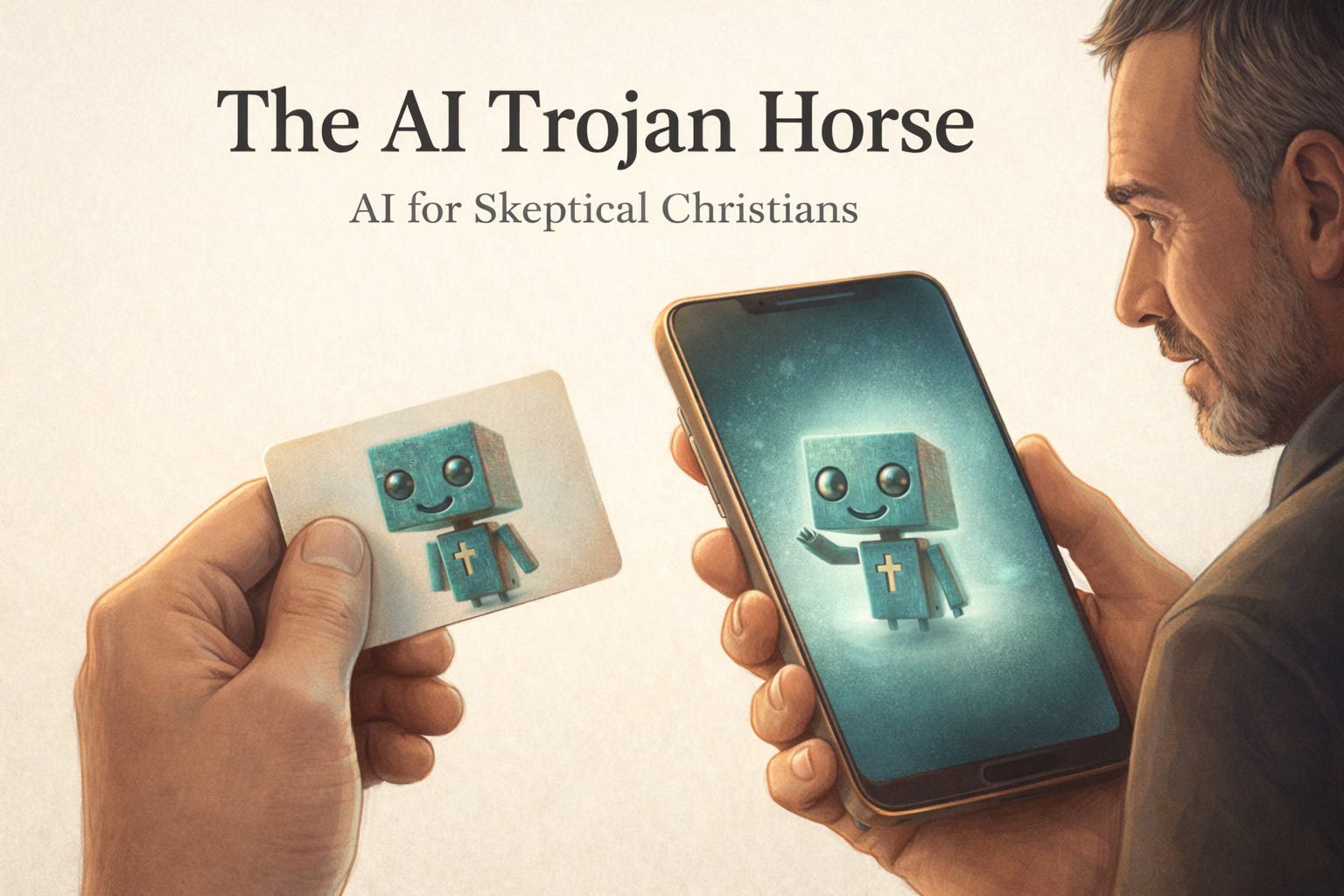
I carry a few small cards with me everywhere.
They’re about the size of a business card. They sort of look like a hotel key with a funny looking robot. No instructions. No QR code. No lengthy explanation required. Just a tap on someone’s phone and something happens that I’ve watched stop people mid-sentence.
They look up at me. Then back at their phone. Then back at me.
“What is this?”
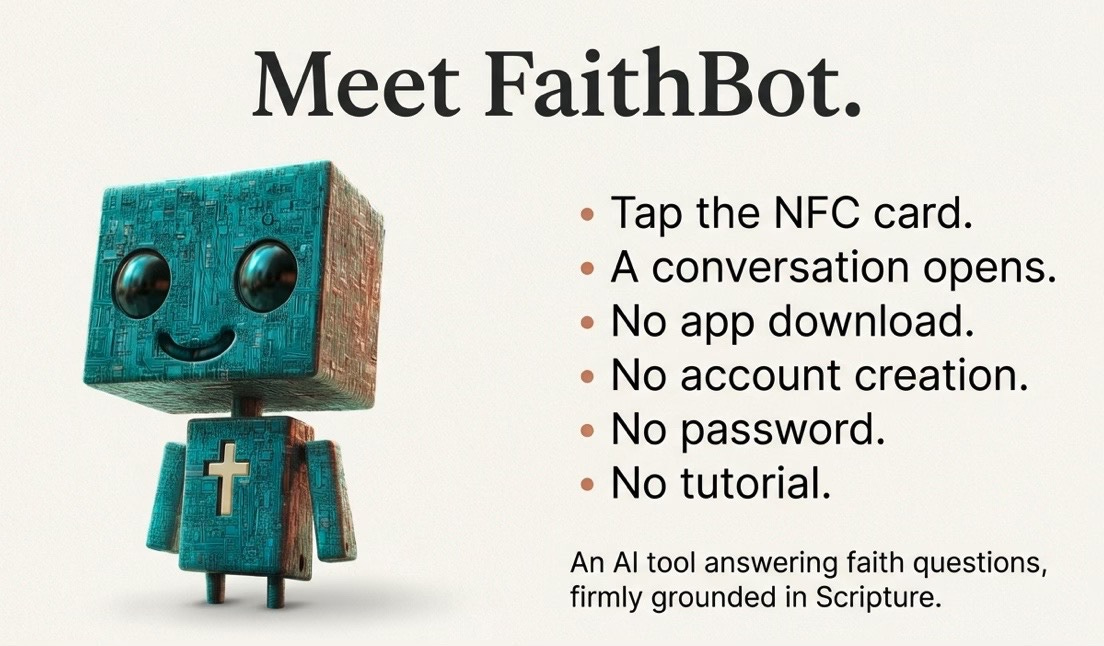
This is FaithBot. It’s an AI tool that answers faith questions while being firmly grounded in Scripture. That’s how I bring the doubters along.
The Problem with Introducing People to AI
Most people’s first experience with AI was bad.
They tried ChatGPT and got a very confident, but wrong answer. They used an AI writing tool that sounded like a robot wearing a suit. They read a headline that scared them. Or they sat through a demo from someone who was clearly more excited about the technology than about them. Perhaps they treated AI like Google and were disappointed.
Now they’re skeptical. Fortunately for me, politely skeptical most of the time. I want to push people to be honest. To share their concerns. I want to affirm many of the concerns, but for the deeply skeptical, I want them to open up and share how they feel.
And here’s the thing, it’s not wrong to be skeptical. A lot of early AI experiences were bad. Clunky interfaces, generic outputs, zero personality. The technology was impressive to the people building it and confusing to everyone else.
So when I walk into a room full of pastors, mission leaders, or lay Christians who have quietly decided that AI is not for them, I don’t argue. I start with slides or quote adoption statistics.
I hand them a card.
What Happens When You Tap It
FaithBot.tools is a collection of AI tools that we’ve built for churches.
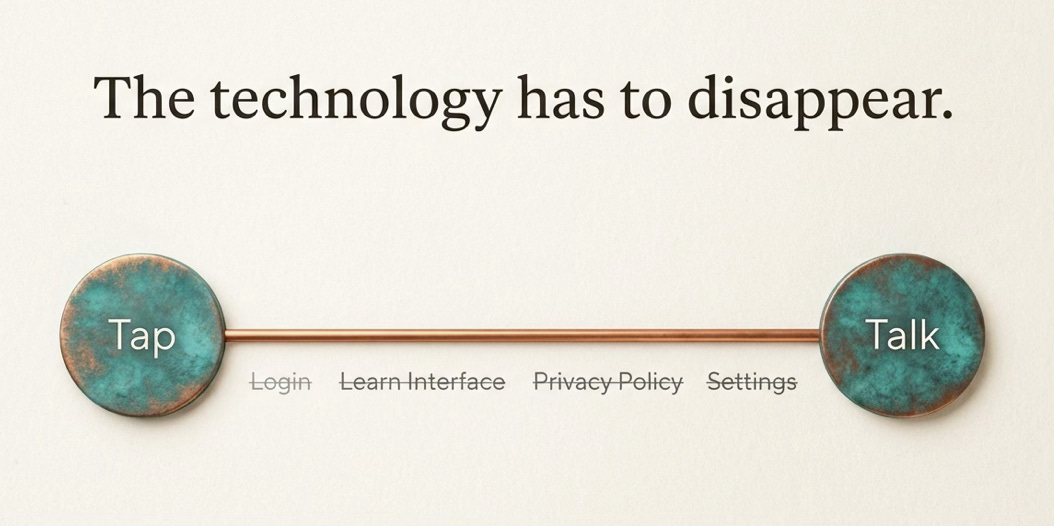
Tap the NFC card to your phone. A conversation opens. No app download. No account creation. No password. No tutorial. No giving up your privacy. Just a clean, simple interface and an AI that’s ready to talk about faith thoughtfully, carefully, in whatever language you speak.
That’s it. That’s the whole experience.
It’s designed that way on purpose. Because the moment someone has to think about how to use it, you’ve lost them. The technology has to disappear. What’s left should just feel like a conversation. We maximize fidelity to God’s Word and user experience.
When a skeptic taps that card and reads the first response, most are genuinely shocked when they read something warm, something theologically grounded, and something that actually listens to what they typed. The expression on their face changes. I’ve seen it hundreds of times now. The arms uncross. The eyebrows go up. There’s a pause.
Then: “Okay. That’s actually really good.”
NOW we can talk about AI.
Why This Works When Most Things Don’t
The NFC card is a Trojan horse.
Not in a manipulative sense, but in a strategic one. You’re not sneaking something harmful past someone’s defenses. You’re creating a moment of genuine surprise that bypasses the defenses that were never actually protecting them from anything real.
Here’s why it works:
There’s nothing to fear. No personal data required. No account. No commitment. They’re not signing up for anything. They’re just tapping a card. The risk feels like zero, because it basically is.
The value is immediate. Within thirty seconds they’re reading a response that’s better than they expected. There’s no onboarding period. No learning curve. The “wow” happens before they’ve had time to talk themselves out of it. They begin to imagine the possibilities.
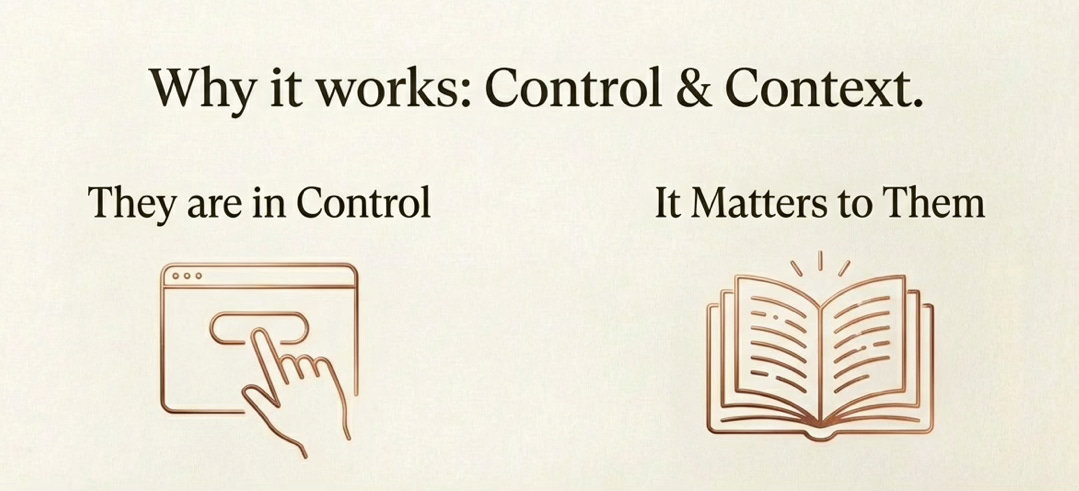
They’re in control. They tapped it. They typed the question. They’re driving. That matters more than most people realize. AI anxiety is often really about loss of control or the sense that something is happening to you rather than for you. The card puts them in the driver’s seat from the first second.
It’s tied to something they already care about. FaithBot isn’t a generic AI demo. It’s built around faith conversations. When AI shows up in that context and handles it with care, it lands differently than any productivity tool demo ever could.
The Conversation After the Tap
Here’s what I’ve learned to do after someone taps the card and has their moment.
I don’t pitch. I don’t explain how it works. I don’t tell them about token counts or language models or the infrastructure behind it.
I ask: “What would you want to ask it?”
And then I watch them lean in.
Because now they’re curious. And curiosity is the only door that was ever going to open this conversation. You can’t argue someone into curiosity. You can’t present them into it. But you can hand them something that creates it on its own.
Within five minutes, I’ve had people who walked into the room skeptics of AI asking if they can get 20 of these cards to take back to others. Not because I convinced them. Because they convinced themselves. It happened the moment they tapped the card.
What This Means for You
If you’re trying to move your organization toward AI adoption and you keep hitting walls, I want to offer you a reframe.
Stop trying to win the argument. Start trying to create the moment. Start with a very simple win that helps people see value.
Find the simplest possible AI application that connects to something your people already love. It could be their ministry, their mission, their community. Make the user experience so clean that there’s nothing to figure out. Remove every possible point of friction. Then put it in someone’s hands and step back.
You don’t need a comprehensive AI strategy to start. You need one tap. One raised eyebrow. One “okay, that’s actually really good.”
The organizations that are going to lead in this space aren’t necessarily the ones with the biggest budgets or the most sophisticated tech teams. They’re the ones who figured out how to create that moment — and then kept creating it, over and over, until curiosity became confidence and confidence became culture.
The Trojan horse doesn’t need to be impressive. It needs to be undeniable.
I still carry these cards everywhere.
Every time I hand one to a skeptic and watch their face change, I’m reminded that the barrier to AI adoption in most organizations isn’t technology. It’s trust. And trust doesn’t come from better arguments.
It comes from a tap.
The card is genius. I have given away the 4 or 5 I picked up in January. People are (I should say, I am) tired of creating accounts and signing in to every space I’d like to access. Faithbot has become an essential reference tool, and I’m grateful to be able to share it without telling people they have to create an account.
I think we're going to have to shamelessly steal the NFC card idea. Sorry, Don.