The alarm has been going off for two years, but most people have been hitting snooze.
I get it. Change is uncomfortable. Disruption is scary. And when something threatens the way you’ve built your life, it’s easier to look for reasons to dismiss it than to face what it’s actually demanding of you.
What keeps me up at night? All of the people who wait until they feel ready to act when, in reality, they’ll never be ready.
We are not in a gradual transition. We are in a rupture.
The gap between people who are building with AI right now and people who are watching from the sidelines is not static. It’s compounding. Every week that passes, the early movers get faster, sharper, and more capable. And the gap widens. The changes in the last few months are greater than the previous two years.
This isn’t theoretical. I’m watching it happen in real time inside lots of organizations, on teams, and in ministry contexts. One person with a clear vision, a laptop, and fluency in AI tools is outpacing entire departments. Not because they’re smarter. Because they are curious and stopped waiting for permission.
That’s the real shift nobody is talking about.
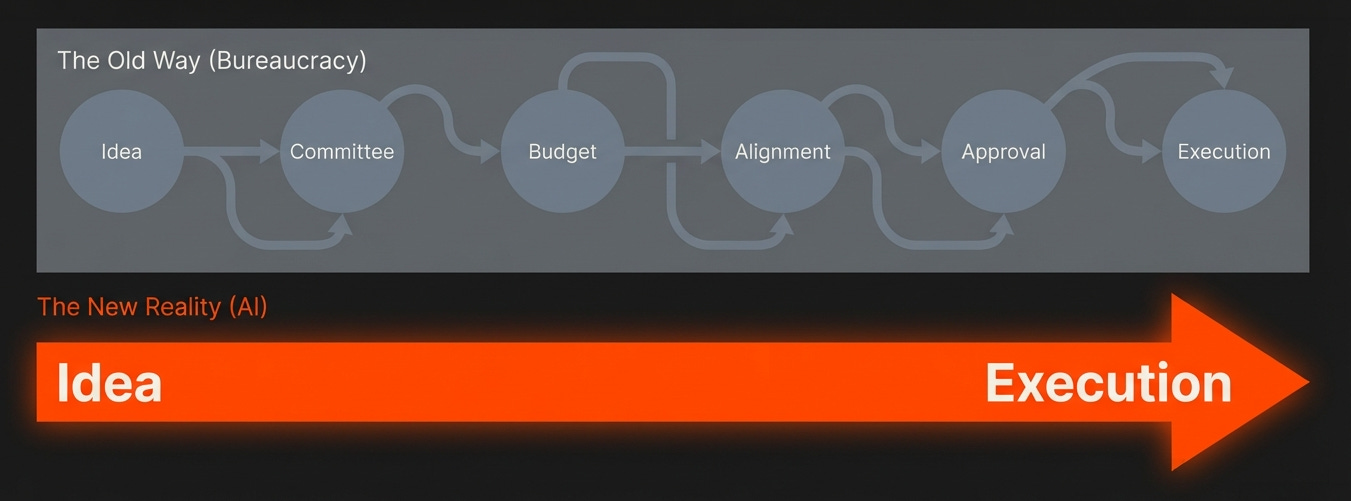
For decades, getting things done inside large organizations required navigating layers of approvals, committees, budget cycles, alignment meetings, and the slow crawl of organizational consensus. AI didn’t just speed that up. It’s dissolving it entirely. The bottleneck was always execution. Now execution is nearly free.
Which means the only thing standing between your idea and reality is whether you’re willing to learn how to move.
Here’s the hard truth about your job.
It’s not really about whether AI replaces your specific role. That’s the wrong question. The right question is whether you’re becoming someone who uses AI to create 10x more value or someone who’s still doing manual tasks that machines can now do better and exponentially faster.
Organizations aren’t going to keep paying the same price for slower output. They can’t. Competitors won’t let them. This means that those who adapt aren’t just surviving, they’re pulling so far ahead it’s starting to look unfair.
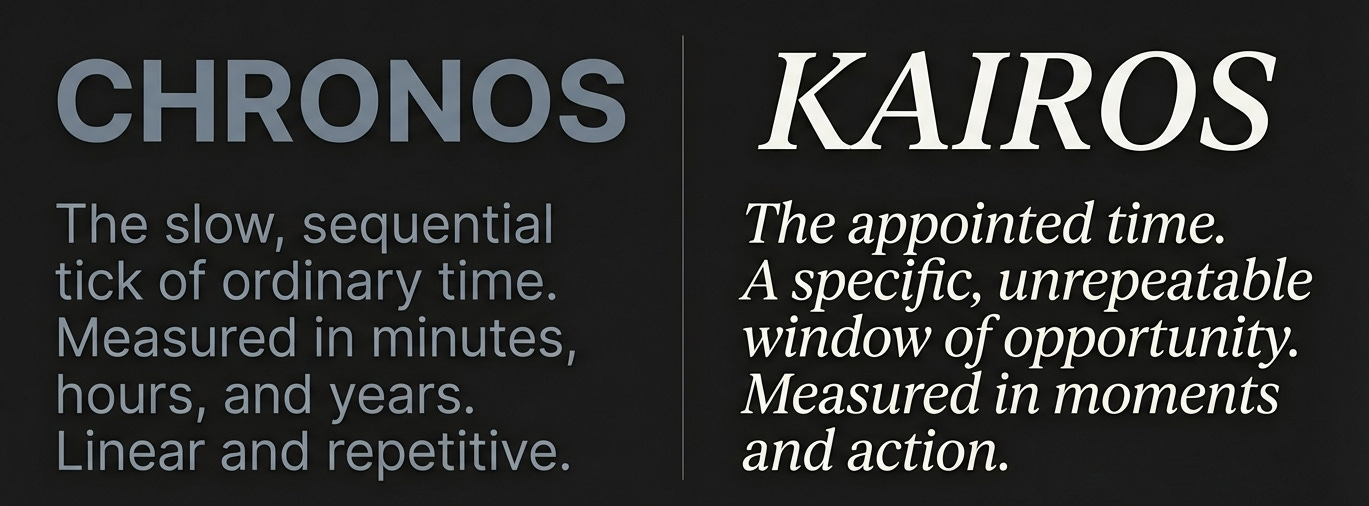
This is the kairos moment. Kairos doesn’t repeat.
In Scripture, kairos means the appointed time. It’s a specific, unrepeatable window of opportunity. Not chronos, the slow tick of ordinary time. This is kairos.
This is one of those moments. This is a time when delay costs more than action.
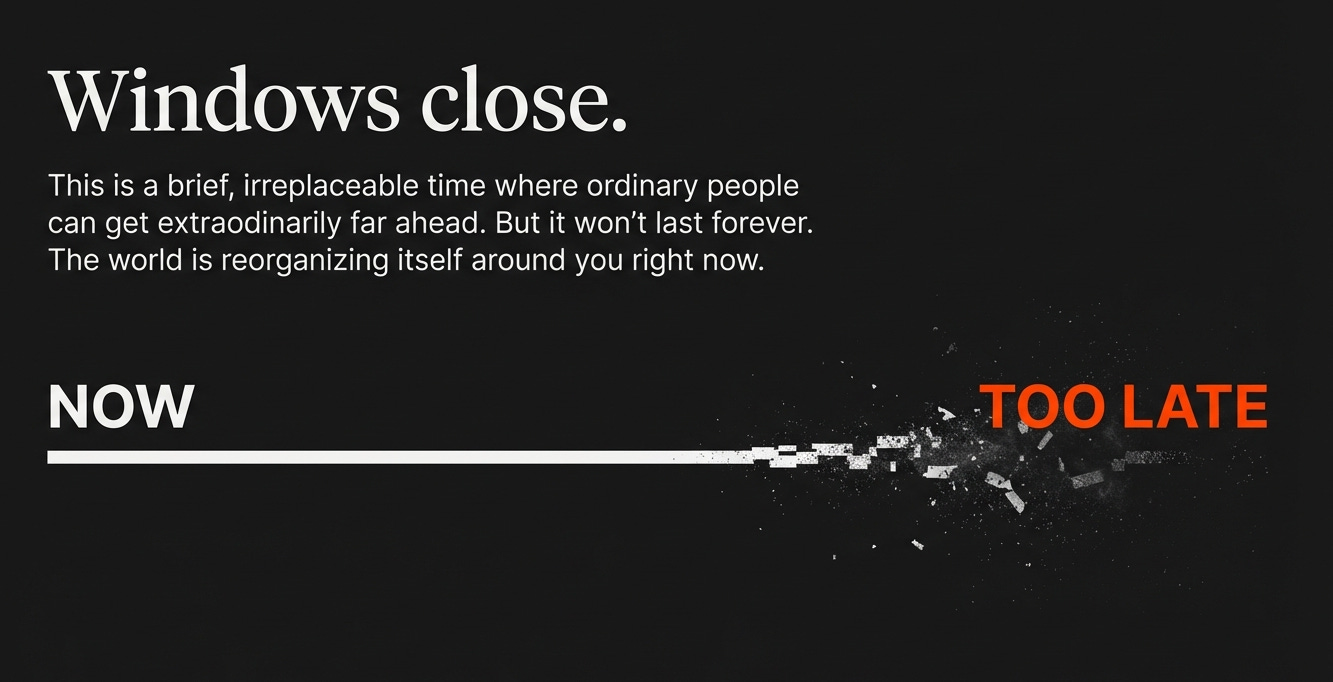
There is a brief, irreplaceable window right now where ordinary people with high curiosity and a willingness to learn can get extraordinarily far ahead. Where credentials matter less than initiative. Where titles matter far less than output. Where what you can build matters infinitely more than what you’ve been allowed to build in the past.
What urgency actually looks like.
Not panic. Not abandoning everything you’re doing. But a serious, honest reckoning with how you’re spending your learning hours.
Every hour you spend consuming content about AI without actually using it is an hour you’re falling behind. Every week you tell yourself you’ll figure it out later is another week of compounding advantage handed to someone else.
The people getting ahead right now aren’t geniuses. They’re not engineers. They’re curious people who embrace innovation. They intentionally decided to start before they felt ready and kept going when it got confusing.
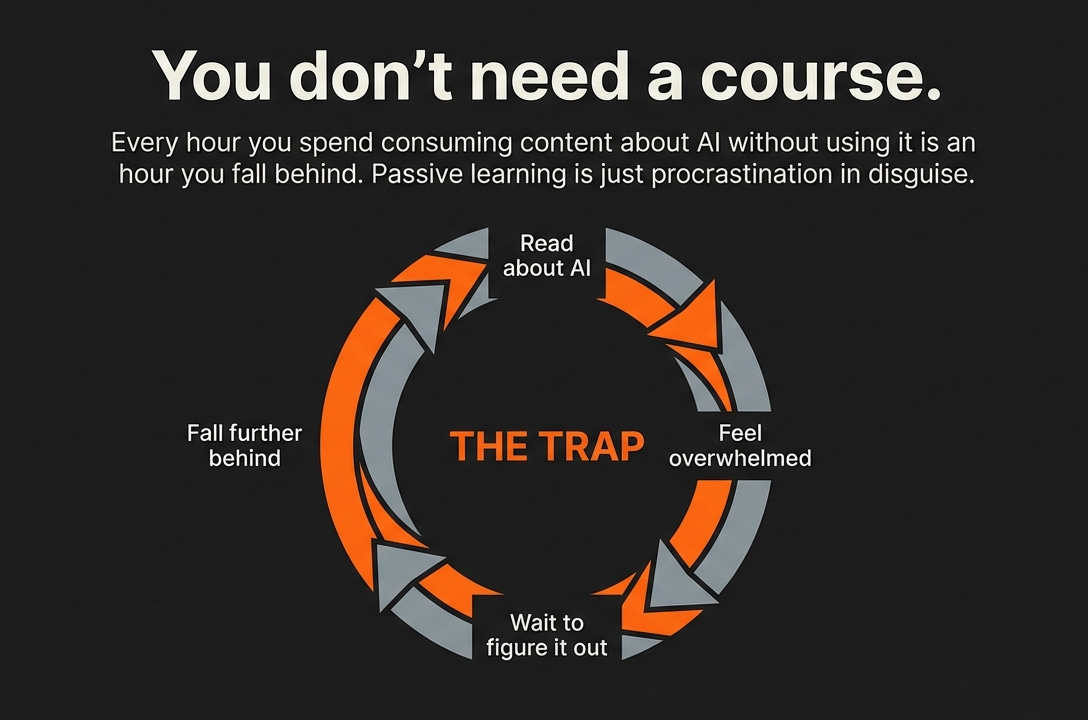
You don’t need a course. You need a project.
Pick something real. Something that matters to you. Something you’ve been meaning to build, write, create, or solve. Then open a tool. Pick any tool but I recommend Claude. Whatever you choose, just start. Not perfectly. Not with a plan. Just decide that you are going to solve problems that you’ve been putting off.
You’ll learn more in three hours of building than in three weeks of reading about it!
When you see what’s actually possible, when the gap between what you imagined and what you can now create collapses in real time, something will shift in you. Your fear will shrink. Your curiousity will be rewarded with possibility. That possibility will expand.
The question isn’t whether this is happening.
It is happening. The acceleration is real. The disruption is already here, not arriving.
The only question is whether you’ll look back on this moment as the time you woke up or the time you stayed comfortable while the world reorganized itself around you. You may think you don’t have time to try this. You don’t have time not to try this.
The window is open.
What are you waiting for?