


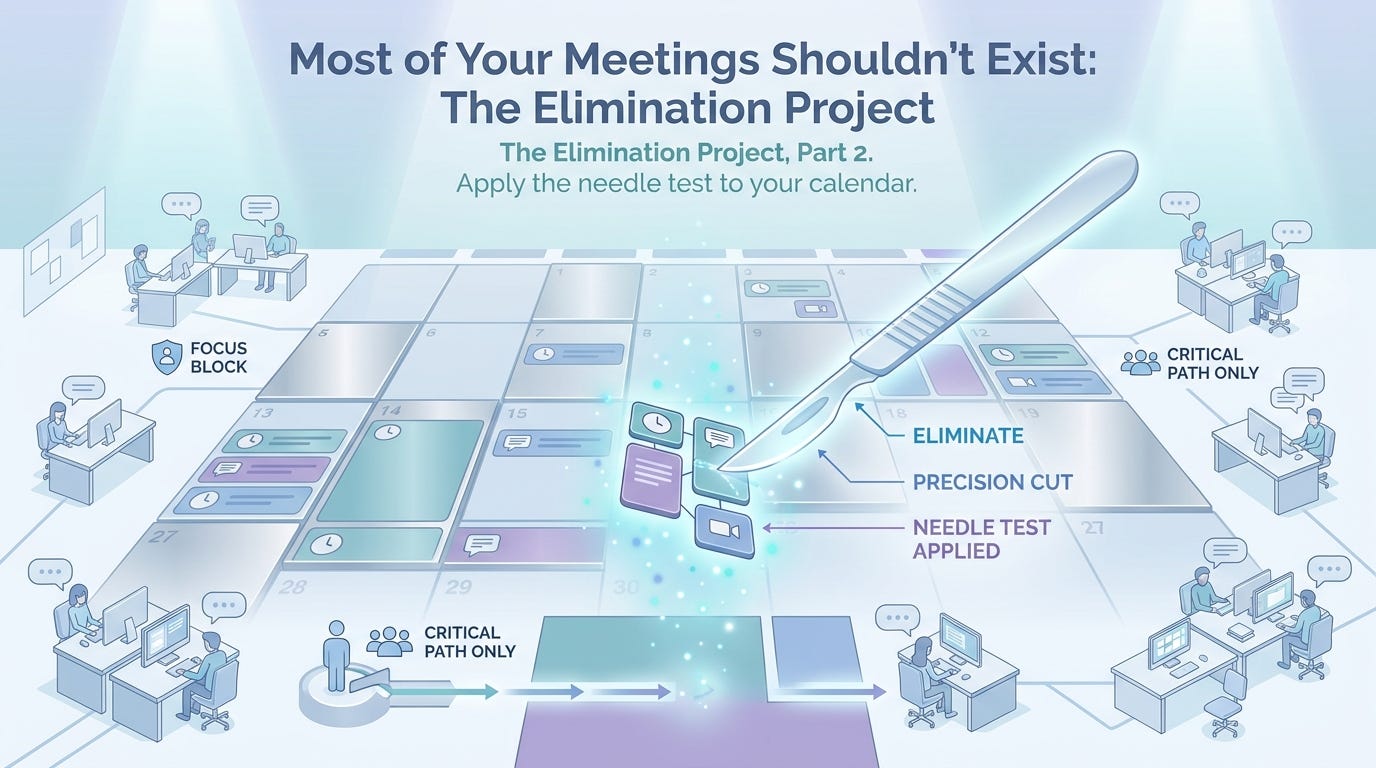
If you haven’t read Part 1, start there. The whole series rests on a question you have to answer before you cut anything: What needle is your work supposed to move? Without that, eliminating meetings is just rearranging the busy.
For the rest of this piece, I’m going to assume you’ve done that work. You know your one or two quarterly needles. You know the KPIs you’re tracking. You have the picture clear enough that, when you look at any activity on your calendar, you can ask the question that matters.
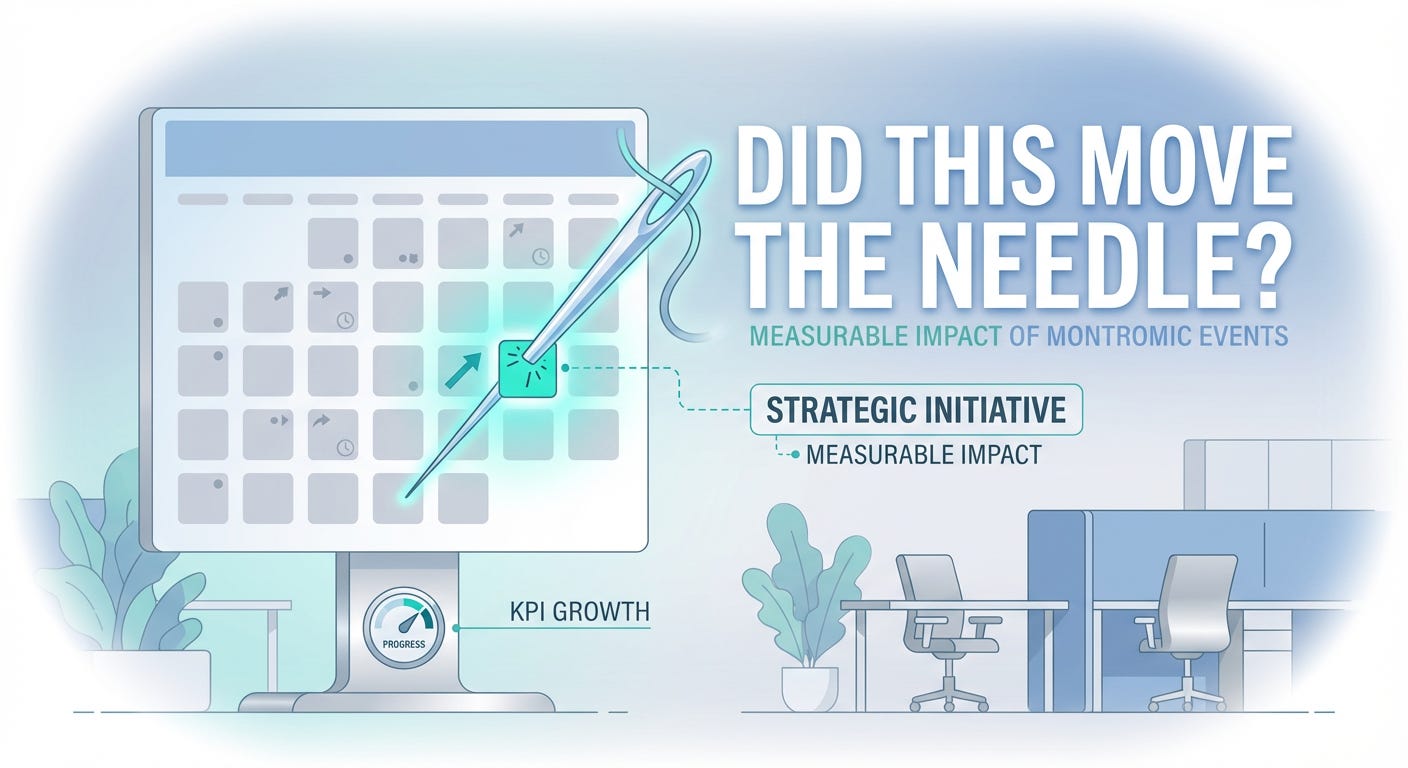
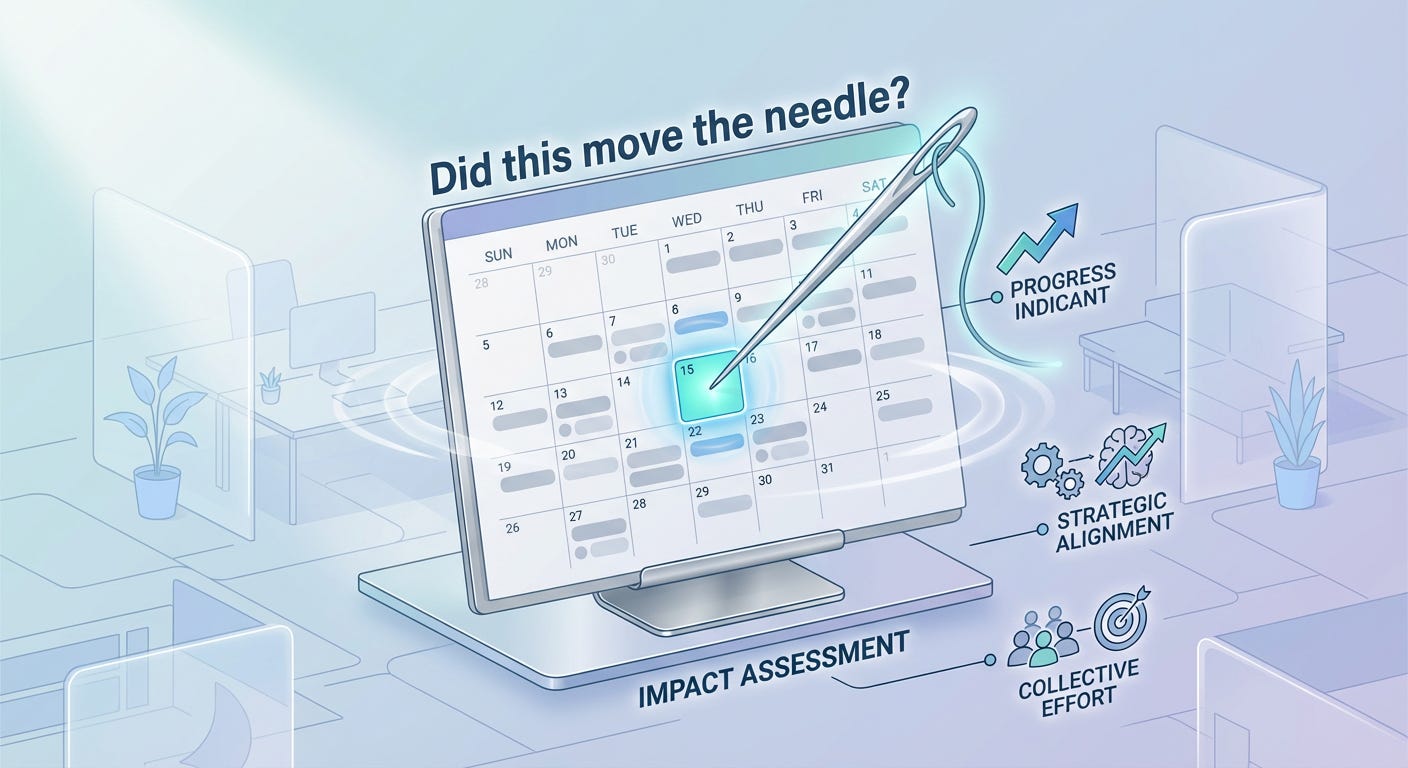
Does this move the needle?
Today we apply that question to the most expensive thing on your calendar. Without a doubt, this is where most leaders lose their most valuable resource, their time.
Today, let’s take on meetings. Use this tool to decide if you even need to have the meeting to begin with!
The Real Cost of a Meeting
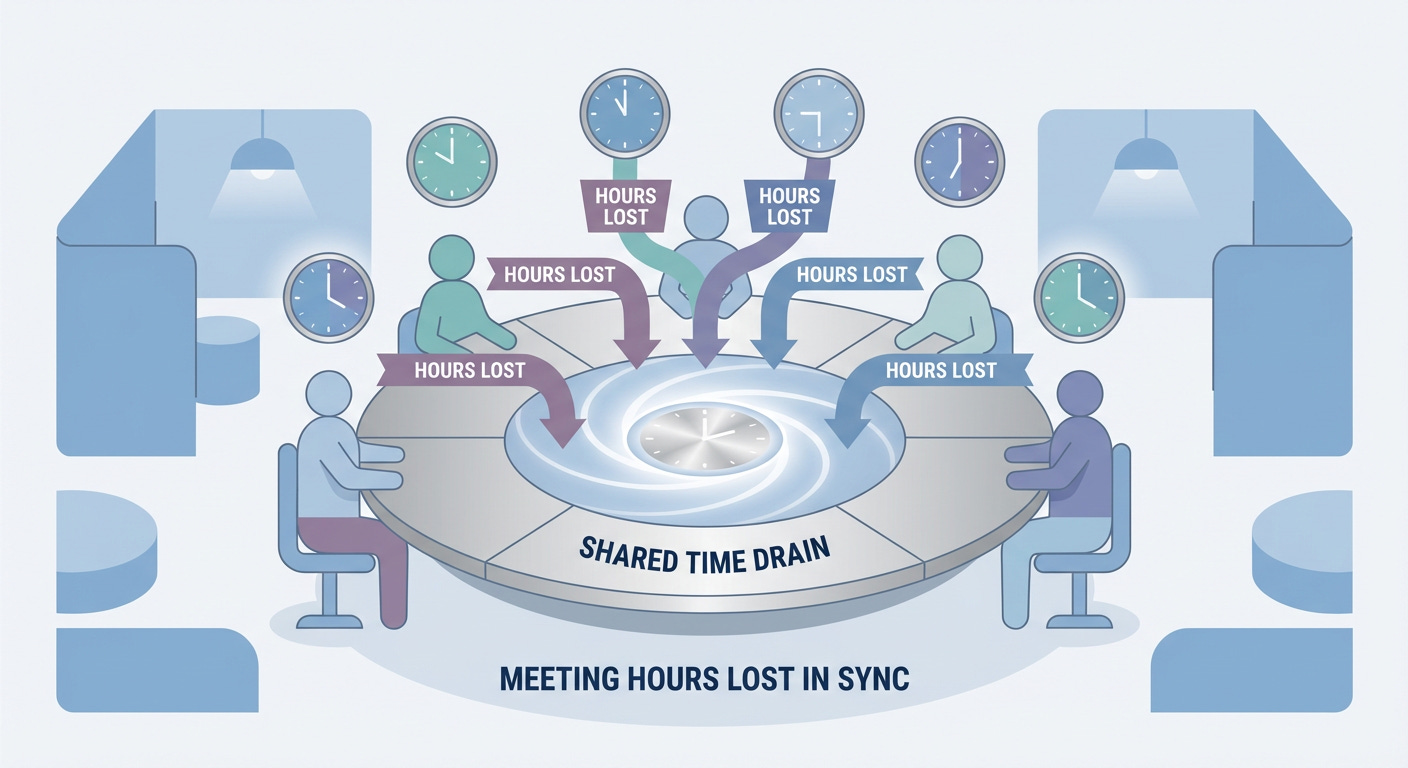
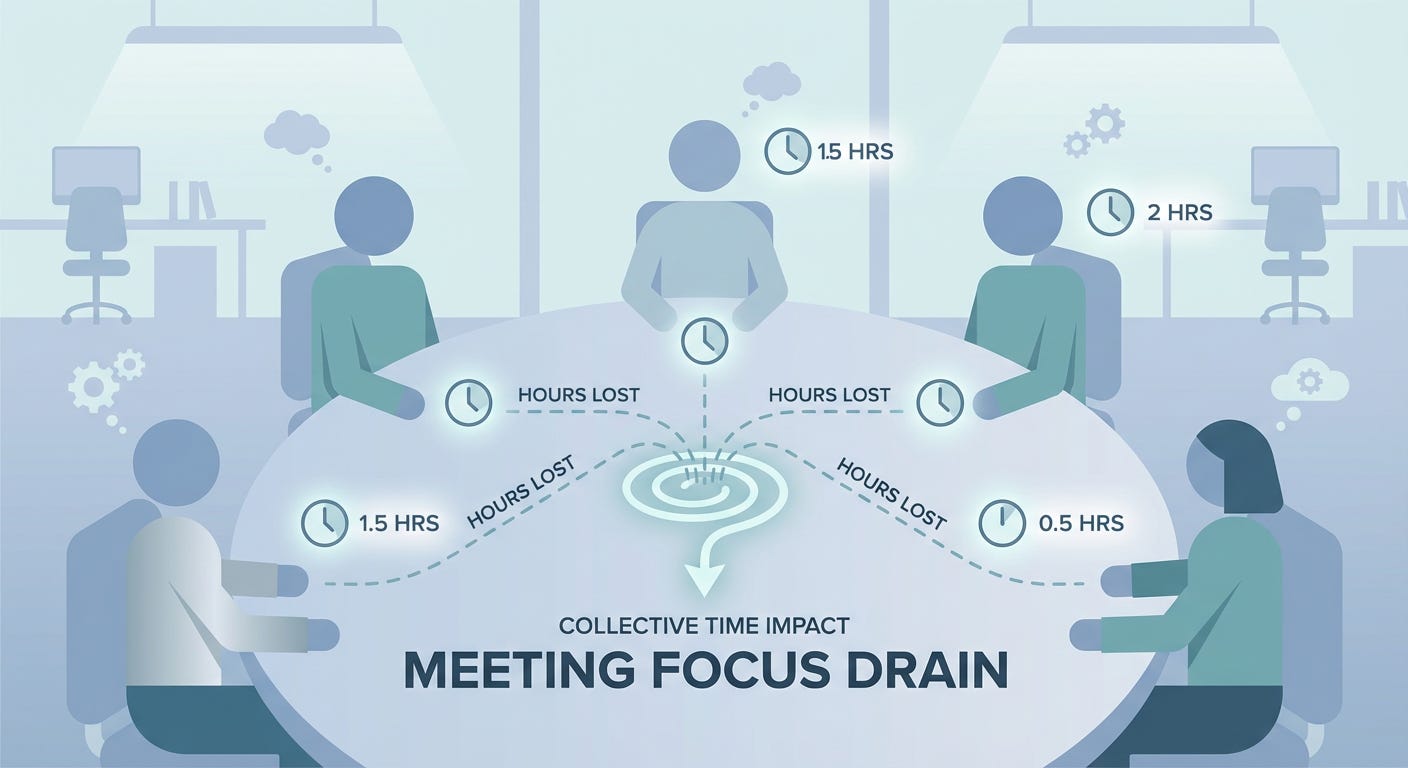
Put six people in a meeting room for an hour and you aren’t spending an hour. You’re spending six hours. When the meeting is recurring weekly across a year, you’re spending roughly 300 person-hours on a single calendar entry. Add peripheral attendees who are there “just in case” or “to keep them in the loop” and you aren’t just spending their hours. You’re spending the hours of everything they would have produced with that time.
Most of those people would have built something, written something, solved something, or made a decision about something else. Maybe they would have talked to a donor or had a spiritual conversation with someone. They would have done the actual work that they are called to do. You know, the work that’s tied to the actual needle.
Instead, they’re in your meeting.
Stop and think about that. Every time you add someone to the invite, you’re not just consuming their time. You’re consuming the time of the higher-leverage thinking they would have done with that block. The person who would have rewritten your strategy is reading their phone in the back row of your status update. The person who would have shipped the new product is performing their week back to you in 90 seconds of bullet points.
This isn’t an organizational productivity problem. It’s a leverage problem and the people most affected are usually the ones with the highest leverage in the organization, because they’re the ones we keep adding to invites.
If your needle is real, every hour spent in a meeting that doesn’t advance the needle is an hour stolen from the only work that matters.
The Meeting Needle Test
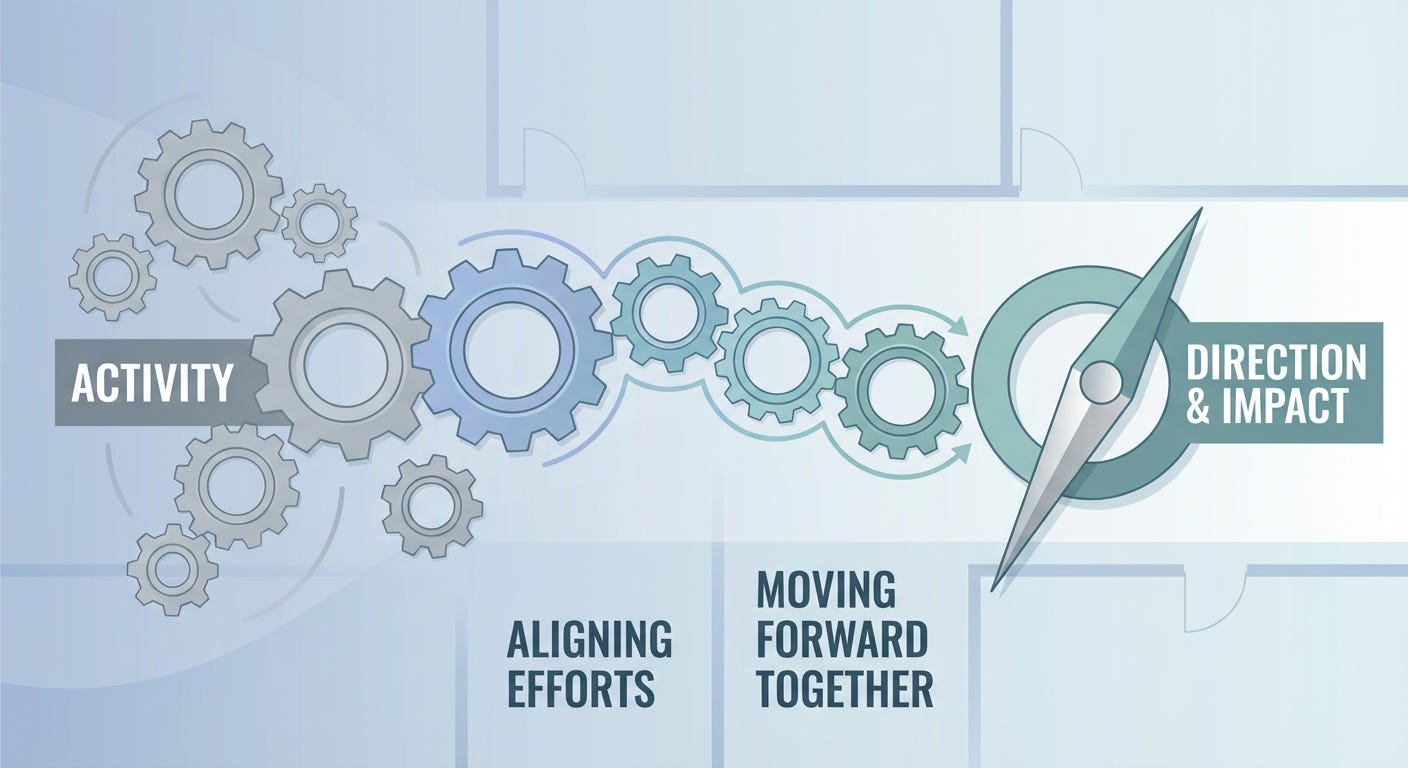
Walk through your calendar from last week and apply this test to every recurring meeting that ran 30 minutes or more.
Did this meeting produce a decision, or move information, that advanced one of my needles?
Not “was it a good meeting.” Not “did people show up engaged.” Not “did we cover the agenda.” The only question that matters is whether the meeting moved the needle you said you cared about.
Most leaders I work with, when they’re being honest, answer no for somewhere between 60 and 80 percent of their meetings. The meetings happened because they were on the calendar. They reached no decision, surfaced no information that couldn’t have been written in a paragraph, and ended with “let’s circle back next week.” Which is just shorthand for “we’re going to have this exact same meeting again.”
That’s not a meeting. That’s a recurring tax on the most expensive resource in your organization, paid in the currency of your most senior people’s attention.
The hard part of fixing this isn’t the math. The hard part is that meetings have become a substitute for actual work. Showing up to the meeting feels like progress. Sitting on the call counts as a contribution. The performance of attending replaces the discipline of actually producing.
Once you have a real needle by which you are measuring progress, the mirage breaks. The meeting either advances the needle or it doesn’t. There is no in-between.
Two Pizzas, Not Twenty
Jeff Bezos used to run Amazon by a rule that has become almost famous. If a team is too big to be fed by two pizzas, the team is too big.
The rule wasn’t really about pizza. It was about communication. Smaller teams reach decisions faster. Smaller teams communicate cleanly. Smaller teams can’t hide. Smaller teams innovate, because everyone has space to actually contribute and nobody is waiting for permission from three layers of management.
The same logic applies to meetings, only more so. Every additional attendee makes the meeting longer, slower, less decisive, and more performative. Past about five or six engaged participants, you don’t have a meeting anymore. You have an audience.
Microsoft Teams, Zoom, and Google Meet have made this problem dramatically worse. In the physical world, there was at least a friction tax to inviting people. You needed a room big enough. People had to physically show up. The cost was visible. In the virtual world, you just add another email to the invite. There is no marginal cost to the inviter, and there is unlimited marginal cost to the invitee.
So we add, and add, and add. The 4-person decision meeting becomes a 14-person broadcast. The team doing the work becomes the audience watching it not get done..
The two-pizza rule, applied to meetings: if you can’t name what every single attendee is going to contribute to advancing the needle, they shouldn’t be in the room. By the way, I like pizza… so there goes half a pizza!
If they’re there to listen, send them the document.
If they’re there to be informed, send them the summary.
If they’re there because their boss told them to be there, that’s a different conversation, and probably not one that requires a meeting either.
The Meeting Test Tool
I built a tool to help with this. It lives at meetings.donbarger.com and it’s free. There is nothing to install.
The tool is called the Meeting Test, and it’s designed for the person calling the meeting, not the people stuck attending it. Before you send the invite, you answer a handful of questions about what you’re planning. The tool gives you one of four verdicts.
Hold — this meeting should happen. Here are the two or three things that will make it actually work.
Reshape — it’s a meeting, but not the meeting you planned. Here is a tighter agenda and who to cut from the invite.
Go Async — a message, a Loom, a shared doc.
Cancel — don’t hold it. Here is what to tell people, and what (if anything) replaces it.
The questions the tool asks are the questions every meeting organizer should be asking themselves anyway. What specific decision needs to come out of this meeting? Is there a written agenda? How long is it? How often does it happen? When was it last audited? Who is invited and what is each person’s required role?
That last question kills most invitations on contact. If you can’t name a required role for someone, they don’t need to be there. Most of us have never even tried to name the role. We invite people because we want them to feel included and we’re afraid of leaving them out. Because cc-ing the manager feels safer than not cc-ing them. None of those are reasons to consume an hour of someone’s life that could have been spent on the work tied to your actual needle.
But the most important question on the tool is the first one. What specific decision needs to come out of this meeting?
If you can’t name a decision, that’s the answer. It’s not a meeting. It’s a recurring invitation to gather without purpose. Cancel it.
The Meeting Test is the operational version of the needle question. The needle says “what is your work supposed to move?” The Meeting Test asks the same thing, scoped to one calendar entry: “what is this meeting supposed to move?” If the answer is unclear, the meeting fails.
What Replaces the Meeting
Killing a meeting feels scary because we assume the meeting was doing something. Often it wasn’t. But sometimes it was, and the question is what replaces it.
Three replacement patterns work most of the time. Each one has a real-world version and a virtual version, and the difference matters more than you realize.
The standup
A real standup is what the name says. People stand. The meeting is short because nobody gets comfortable. It’s a quick, focused exchange of what changed and what’s blocking progress. That’s it. No deep dives. No problem-solving. The promise is that it’ll be over in five minutes, and the standing posture enforces the promise.
Sit down and you’re already locked in. You’ll run long. The meeting will inflate. People will bloviate. The whole point is the friction of standing. It makes everyone want to finish.
The virtual version is harder, because nobody can see whether you’re actually standing. The discipline has to come from the agenda. Set a hard cap. Make it five or ten minutes, no more. Set a tight format that everyone follows.
What changed?
What’s blocked?
What’s next.
That’s it. No discussion threads. No tangents. If something needs deeper conversation, it goes to a separate one-on-one or a written note. Not in the standup.
For me, the in-person version often happens at the coffee station. I’m a coffee snob, so I’m always making coffee (at my desk). Someone else from the team shows up because they know I have the good coffee. We exchange a one to two minute update on a project. That’s the entire status meeting. It’s over before either of us has finished pouring.
Just this week I had two different updates in the hallway. Neither of these meetings were requested. Neither scheduled. Both were completely sufficient to catch up with no formal meeting request. There was no calendar block. No sit-down. Just enough information to keep the work moving, exchanged in the time it takes to walk past someone.
That’s what a standup is supposed to feel like. Five minutes feels like a long version of it.
The hard part is that hallway updates don’t happen by themselves in remote work. They can’t. Nobody walks past anybody when everyone’s at home. So the updates either get scheduled into a formal meeting (which inflates), or they don’t happen at all (which means the team loses the lightweight coordination that in-person work creates for free). The remote version of the hallway update has to be made intentional. A short Teams message. A two-line message. A 90-second voice note. A scheduled standup with a tight five-minute cap. Whatever the form, the leader has to design it deliberately. In the office, these touchpoints just happen. Online, they have to be built.
Office hours
Instead of a recurring meeting where five people gather to maybe ask questions, hold open office hours. Block 30 minutes twice a week. Whoever needs you, drops in. If nobody needs you that week, you get the time back. The burden of justification sits on the person who needs the meeting, which is exactly where the burden should be.
The in-person version is straightforward. You’re in your office or online, or at a known location, at known times. People who need you stop by. People who don’t, don’t.
The virtual version requires the same intentionality as the standup. You publish the time block. You commit to being available. People drop in via Teams or Zoom. The technical setup is trivial. The cultural setup is harder. Your team has to know that office hours are real, that the time is genuinely open, and that they won’t be punished for using or not using it.
The compounding benefit of office hours is that the people who would have been “invited” to your standing meeting will simply not show up to office hours, because they didn’t actually need to be there in the first place. The standing meeting was forcing attendance. Office hours filter it out.
The decision document
When a real decision needs to be made and a synchronous conversation might actually help, write the decision document first. Lay out the situation, the options, the tradeoffs, your recommendation. Send it ahead of the meeting. The meeting itself becomes 15 minutes of focused disagreement with the document, instead of 60 minutes of explaining the context to people who could have read it themselves. Amazon famously does this. It works.
This pattern works equally well in-person and virtually. The format doesn’t change with the medium. Only the willingness to do the prep work in advance matters.
None of these are revolutionary. All of them are sitting there, available to any leader who’s willing to interrupt the routine of how meetings have always worked.
The Real Question Is What You Do with the Time
Here’s the part most productivity advice misses.
If you cancel five hours of meetings this week, you have to be intentional about what happens to that time. If it backfills with shallow work, busy-work, or more meetings, you haven’t eliminated anything. You’ve just rearranged the deck chairs.
This is where Part 1 pays off. If you have your needle clearly named, you know exactly what should fill the recovered hours. The deep work. The strategic thinking. The customer conversations. The document that will replace the next ten meetings. The coaching of one person who needs you. The thing only you can build.
Higher-leverage work expands to fill the time you create for it. Lower-leverage work expands to fill the time you don’t protect. The meetings problem and the deep-work problem are the same problem.
The needle tells you which is which.
One Take-away
This week, do exactly one thing.
Open your calendar. Pick one recurring meeting that you organize. Run it through the tool at meetings.donbarger.com.
Whatever the verdict is, act on it. If the test says Hold, sharpen the meeting with the suggested fixes. If it says Reshape, cut the invite list. If it says Go Async, send the message instead. If it says Cancel, cancel it.
Just one meeting. This week.
Then put the recovered time on something that actually advances your needle. Not on a different meeting. Not on the next email. On the work that, three months from now, will actually have moved something that mattered.
Tell me what happened. What got cut. What replaced it. What you did with the recovered time. Drop a message and let others know what you did.
Here are the takeaways from today.
Justify everything you keep.
Eliminate everything else.
The needle decides.
Thanks for reading AI, Innovation, and Faith! This is Part 2 of The Elimination Project. Part 1: the manifesto and the needle question explains the philosophy underneath the entire series. Part 3 takes on subscription decay — the easiest win in the series. The Meeting Test tool is free and lives at meetings.donbarger.com.