A rare Friday evening post from me because this is breaking news. Forgive typos as I am trying to get this out asap.
If you are like me, you have really enjoyed using Anthropic’s Fable 5 this week. It has been an entirely new level of AI this week. It was great… until it stopped working tonight.
One minute I was watching the US winning against Paraguay as well as watching 120 AI agents run simultaneously, doing things that still feel impossible to fully describe. The next, nothing. I figured it was a bug, maybe a rate limit, maybe something on my end. I started troubleshooting. Checked my setup. Tried again. I opened Twitter to complain about the dive the Paraguay player made. Then I saw the Anthropic post that they had to pull their flagship model.
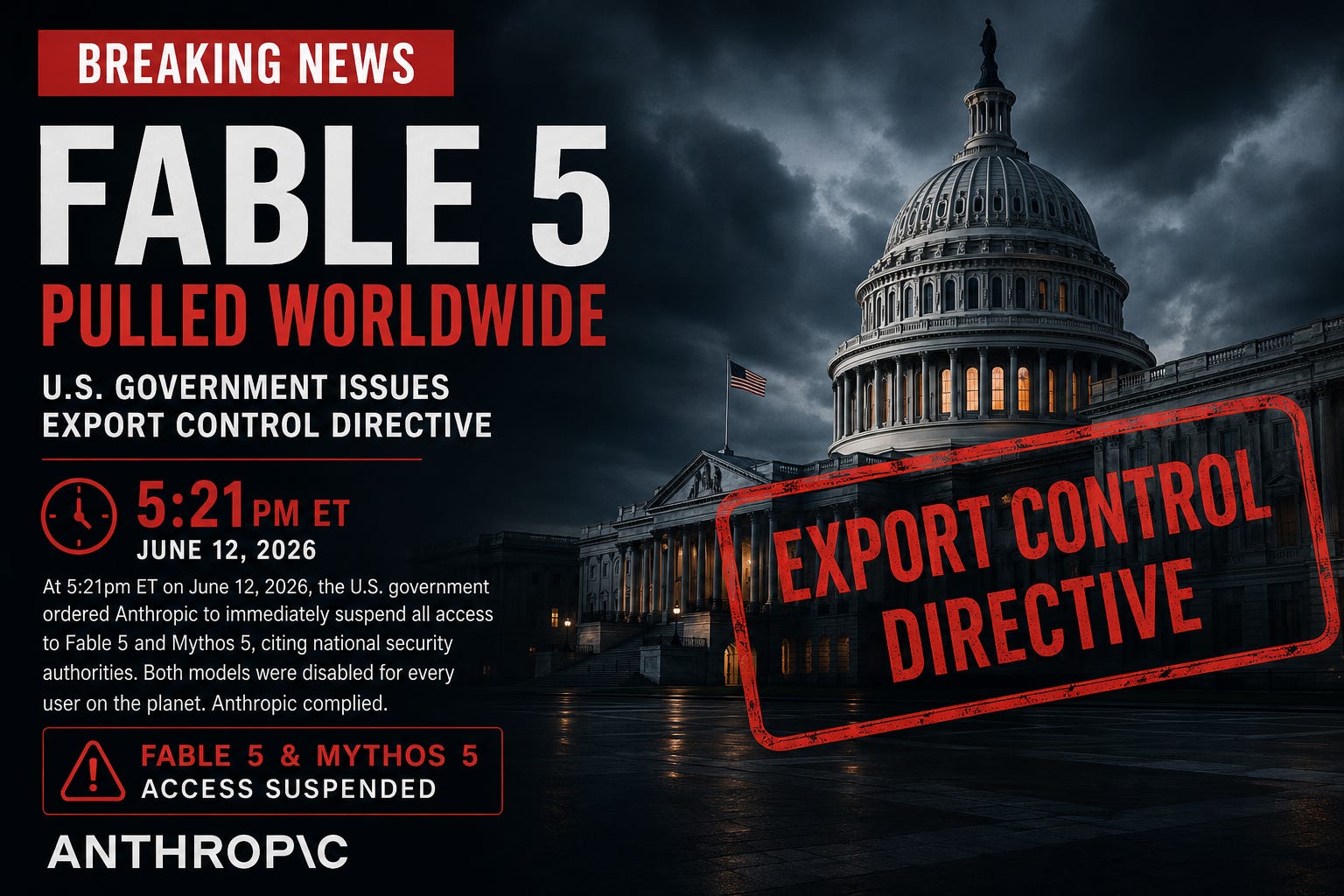
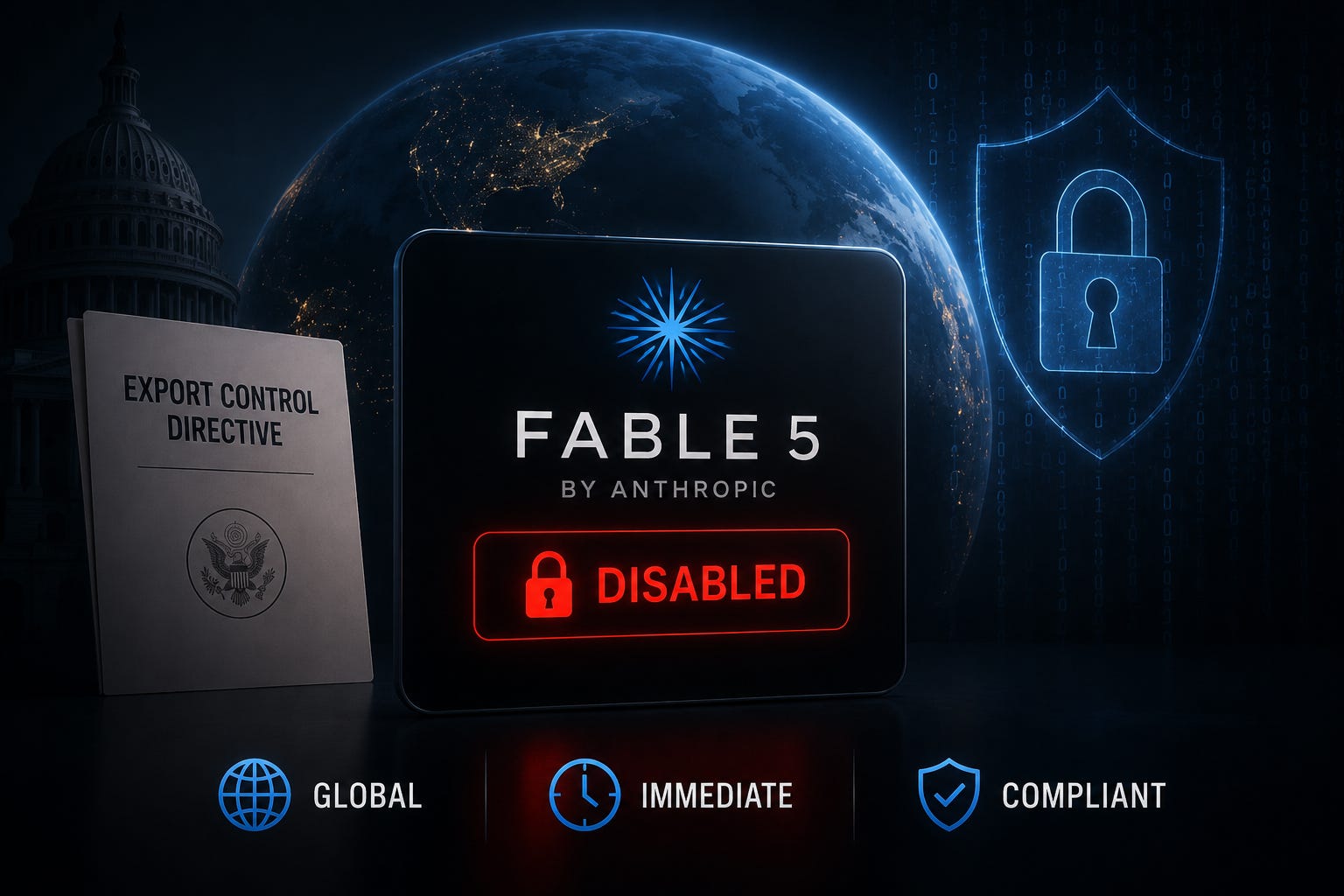
At 5:21pm ET on June 12, 2026, the United States government issued an “export control directive” ordering Anthropic to immediately suspend all access to Fable 5 and Mythos 5, citing national security authorities. Within hours, both models were disabled for every user on the planet, not just foreign nationals, but everyone, including Anthropic’s own foreign national employees. The government believed a method of bypassing the model’s safety limits had been discovered. Anthropic complied.
Just like that, the most capable AI model I have ever touched was gone. Hopefully this is only temporary.
What is Fable 5?
For those who missed this brief window of absolutely awesome AI, here’s the context.
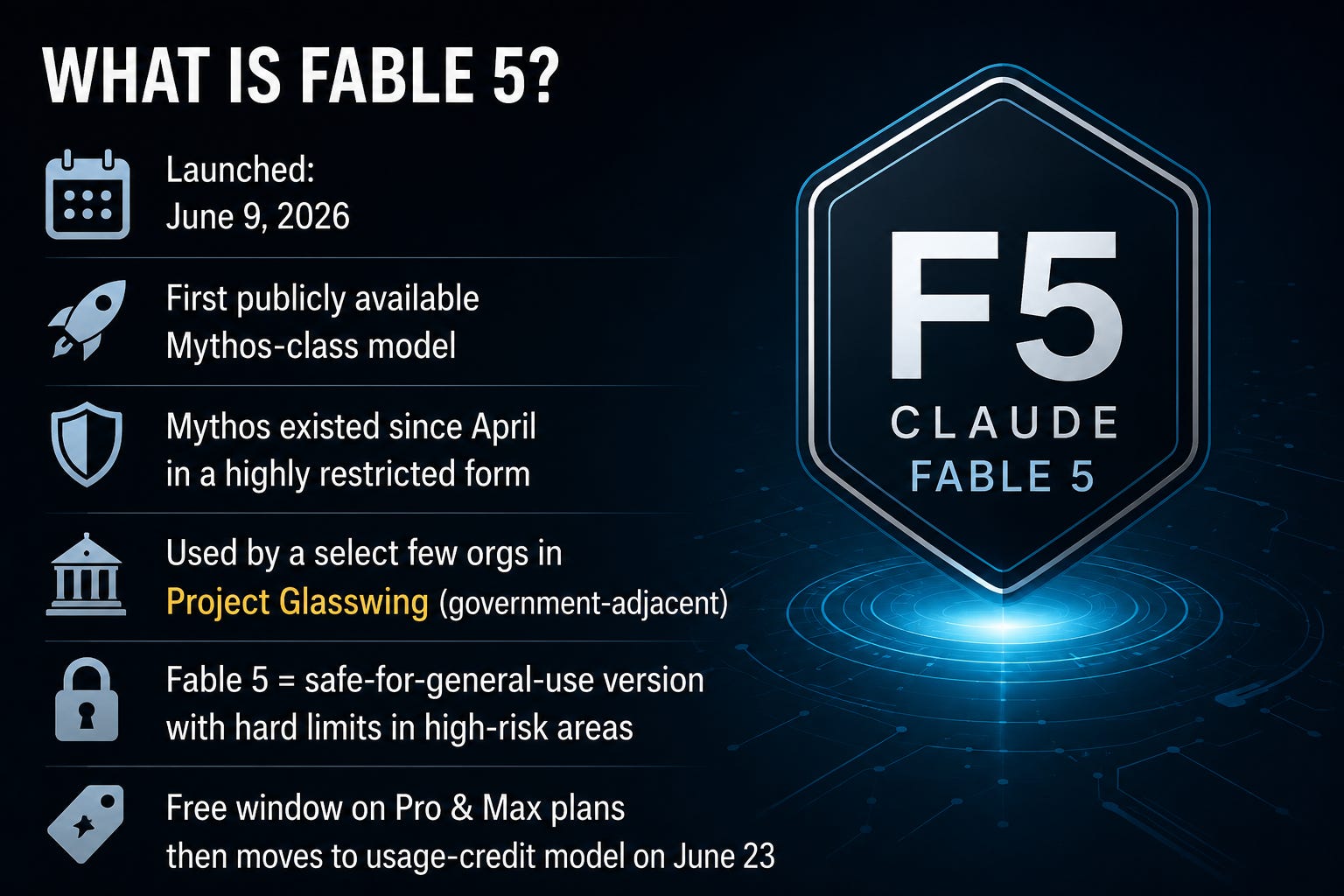
Anthropic launched Claude Fable 5 on June 9, 2026, just three days ago, as the first publicly available version of its Mythos-class model. Mythos had existed since April in a highly restricted form, available only to a handful of organizations working on critical infrastructure as part of a government-adjacent program called Project Glasswing. The model was so capable in cybersecurity applications that access was treated more like a national security clearance than a software subscription.
Fable 5 was the version Anthropic determined was safe for general use, with hard limits in high-risk areas. It launched with a brief free window on Pro and Max plans, then was scheduled to move to a usage-credit model on June 23.
I had about two full days with it. Two days was enough to understand that something genuinely different had arrived.
120 Agents
Here’s the thing about Fable 5 that is difficult to explain to someone who hasn’t used a frontier model at this level. It doesn’t just answer questions better. It reasons differently, plans differently, holds more context, makes fewer errors across longer chains of logic, and executes complex multi-step tasks with a reliability that previous models couldn’t match.
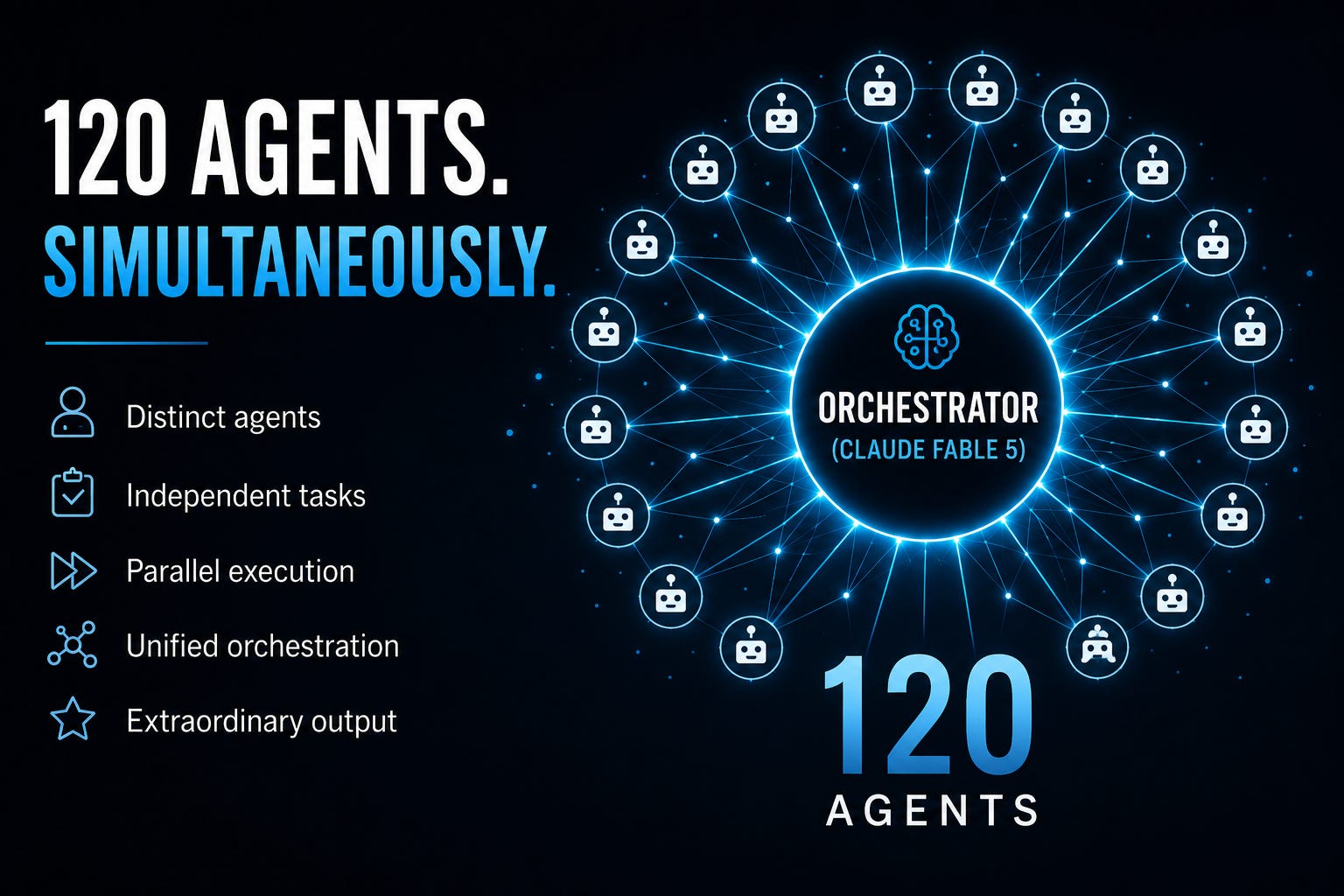
Tonight, I was running 120 agents simultaneously. That’s nuts!!!
Let me be clear about what that means if that means nothing to you. That’s not 120 queries. Not 120 chat windows. This was one hundred and twenty distinct AI agents, each with a task, each working in parallel, each contributing to a larger project. The orchestration was remarkable. The output was remarkable. The sheer scale of what was possible in a single session was something I genuinely did not expect even from a model of this caliber.
I’ve been building tools with AI. I teach classes on AI and I am weekly writing about it. I have seen a lot of impressive demonstrations. This was next level and felt like a threshold had been crossed that most people outside this work don’t fully appreciate yet.
And then it stopped.

Safety Guardrails
Fable 5 was significantly more aggressive about triggering its safety guardrails than previous Claude models. I noticed this repeatedly the past couple of days. Routine penetration testing that I had been running without issue on other Claude models kept hitting violations with Fable 5. The model would shut down the task, decline to continue, and redirect entirely.
This matters because pentesting is legitimate, important security work. Finding vulnerabilities in your own systems before someone else does is not a fringe use case. It is responsible practice. And I had established workflows on other Claude models that handled it without friction.
Fable 5 didn’t. It was very sensitive to trying to perform pentesting. Anthropic had announced that Fable 5 had hard safety limits in high-risk areas, and cybersecurity is one of them. The full-capability Mythos 5 model, with those limits partially lifted, was reserved for approved organizations in Project Glasswing. What the public got was the constrained version, and the constraints were significant… and a little inconvenient for legitimate work on my own sites.
The most capable model most of us have ever touched and it was simultaneously more restricted than the models in specific workflows. More powerful in most directions. More cautious in others.
The government apparently believed someone found a way around those limits.
The Moment It Went Quiet
There is something genuinely disorienting about working at the edge of what technology can do and then having it disappear. It was a little frustrating and going back to the other models feels like I have stepped back in time!
The full picture of what is happening between the US government and Anthropic is complicated. There’s an ongoing legal dispute between Anthropic and the Department of Defense, a broader set of export control concerns, and a cybersecurity jailbreak claim that Anthropic says involved previously known minor vulnerabilities. To be completely fair, I don’t have all the facts and nobody does outside a very small group of people in Washington right now. My first reaction was this was retailiation. Time will tell
What I do know is this. A model that had much greater capabilities than the competition was made briefly available and I got to use it. The tools being built right now are not incremental improvements on what came before. They represent a shift. Governance frameworks, legal structures, and national security considerations around them are still being built in real time, often visibly and messily.
Implications
If you’re a builder and practitioner, not a researcher or a policy analyst but someone who actually builds things with these models, this week was wild.
The frontier is moving faster than the infrastructure around it. Fable 5 was available for four days before a government directive took it offline. The organizations that had the clearest view of what this technology could do were the ones who were already in the water, already experimenting, already building. The gap between “curious about AI” and “actually using AI at scale” is quickly growing.
Access to frontier capability is not guaranteed. It never has been, and the events of the last 24 hours make that clear. The model you built your workflow around can be gone by tomorrow morning.
The questions this technology raises are only technical. Questions are also ethical, theological, geopolitical, and human. Why does a government believe it needs to intervene in access to a commercial AI model? What does it mean that a private company can build something capable enough to generate genuine national security concern? Who should have access to the most powerful AI systems in the world, and on what terms? These are not questions for regulators alone.
The Part I Keep Thinking About
120 agents.
I keep coming back to that number not because it’s impressive, though it is, but because of what it represents. Each of those agents was doing something. Reasoning, planning, drafting, analyzing, connecting, checking, etc... The combined output of that session was something no individual person, working alone, could have produced in the same timeframe… not even close. The leverage was extraordinary.
If you are not using AI like this. It was like having a massive job to be delivered. Normally that job may have taken six months and have a full tame of eight people and contractors working on it.
This was like building a team of 120 workers, all being orchestrated, supervised, and organized by an AI supervisory structure. This team of 120 was accomplishing all of the work of the eight and did months worth of work in a few hours. I have had multiple agents running in the past, but the most I ever was really using was about 10
Fable 5 is gone for now. Something else will come. Something better, probably, and with it a new set of capabilities that will feel impossible until you’re in the middle of using them. Who knows, maybe we’ll get Fable 5 back, but for now, I’m moving back to the older models.
Update: Anthropic’s full statement on the government directive is available at anthropic.com. Access to all other Claude models remains unaffected.