


A recent study by Harvard economists David Deming and Lawrence H. Summers confirms what many of us are already sensing—AI is not a future disruptor. It's here, and it’s already reshaping the U.S. labor market.
From 1990 to 2017, the job market was relatively stable. But in the past few years, we’ve seen something different: occupational churn. Roles are shifting, evolving, or disappearing—faster than most people expected. Harvard Gazette
Here is what they said:
AI is a General-Purpose Technology: Think electricity or the internet. It’s going to touch every sector and reshape how things get done. It is that transformative.
Volatility is Rising: The pace of job change is picking up. YOu may not notice it week to week, but it’s happening in the background… and it’s happening fast.
Job Roles are shifting: Get ready for a noticeable change in the distribution of professions. AI is influencing the demand for certain job roles… others, not so much. Remember when prompt engineers were going to be makign $200,000? Yeah, we knew that wouldn’t last. Eventually, it will touch all jobs. The new normal is redefinition of roles.
AI Adaptation isn’t really negotiable: This isn’t about one off training that’s handled by a training department. It’s about building a rhythm of learning and rethinking how we work. Adaptive, continuous, and self-driven are the workds used to describe the type of training we need.
As AI gets baked into how we live and lead, we all need to get better at asking: How can AI help me do this?
Not later. Now!
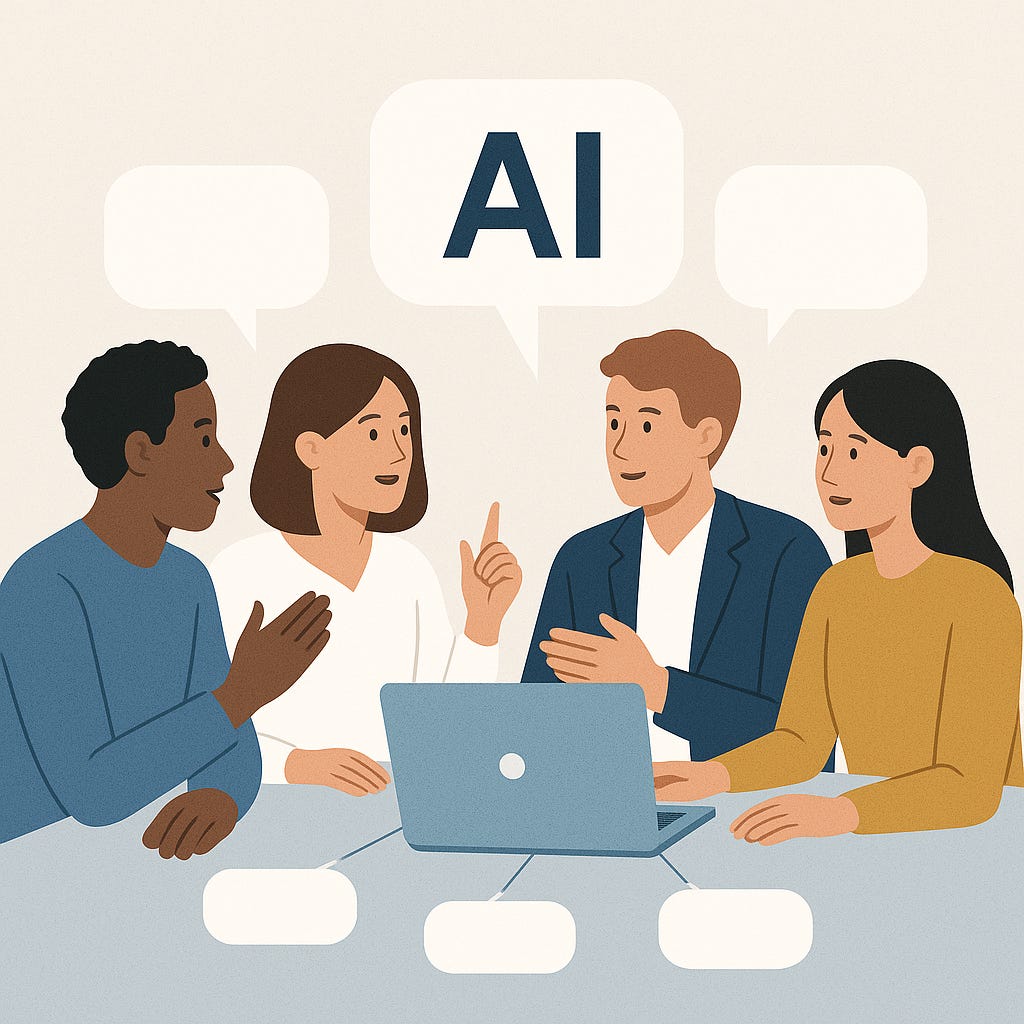
So what do we do… today?
If AI is this disruptive—and it is—then our response should be just as disruptive.
For employees - Ask these questions
What AI tools can help me do my work faster, better, and more creatively?
Where can I find examples of people like me who are using AI? What can I learn from them?
How can I build time into my work week to experiment and learn - without waiting on formal training?
For employers - Ask these questions
Build spaces for informal learning - teams channels, Communities of Practice, Learn and Learn, etc…
Encourage peer-driven discovery, where employees feel safe and supported as they explore AI together.
Recognize that learning how to use (and incorporate AI into work flow) is not a one-time certification, a LinkedIn Learning Course, or an afternoon training event. It’s going to require a mindset shift of exploration, testing, and iteration.
Don’t try to over regulate. Celebrate!
The more I study what is happening, I am convinced that we need a mindset shift as much as we need training.