


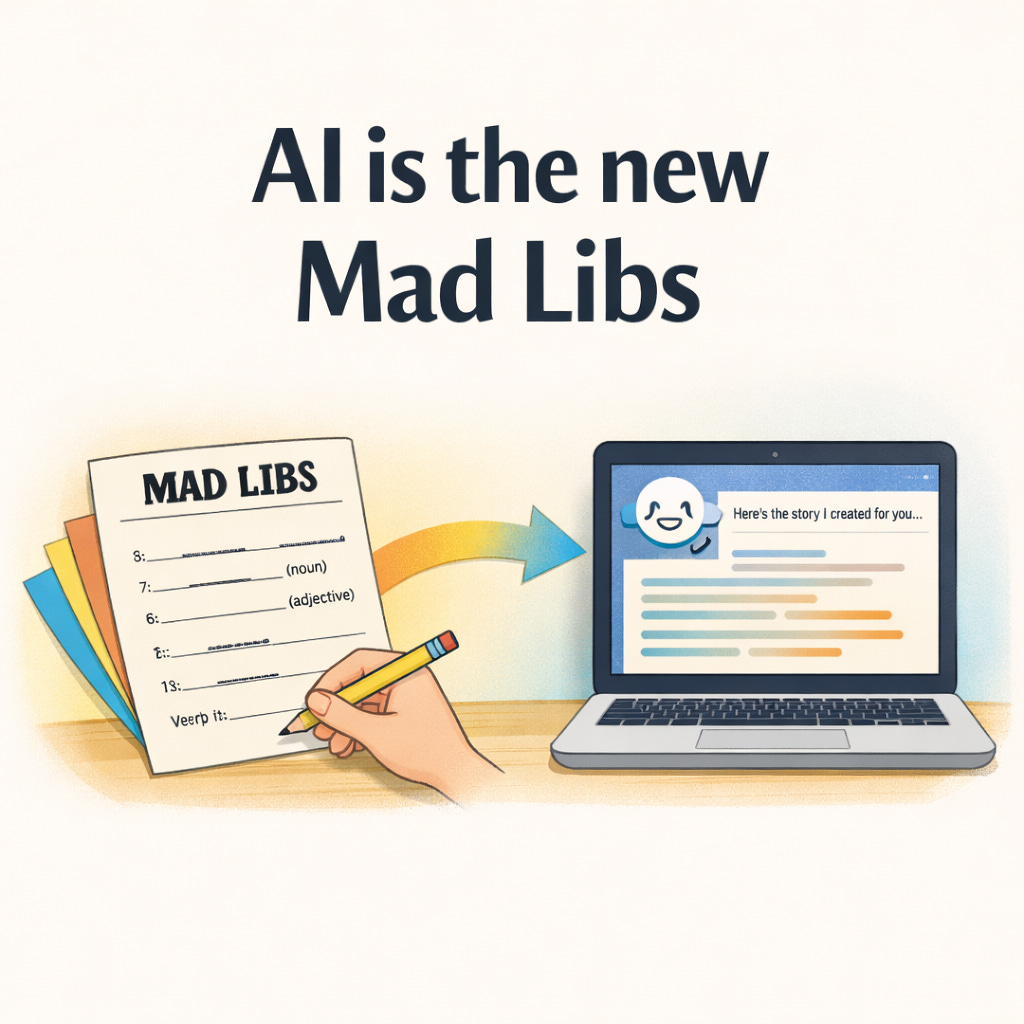
Remember Mad Libs?
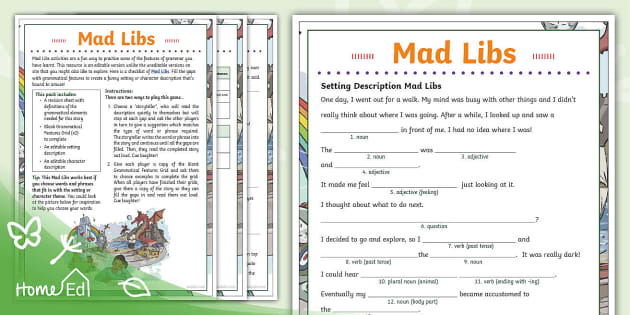
Someone reads a silly story out loud, but key words are missing. You’re prompted for a noun, verb, adjective, maybe a place or name. You fill in the blanks, without knowing the whole story, and then everyone laughs when the final story is revealed.
This week, Hunter Hodnett was teaching the Technical Agents of Change session for Chipp.ai and he used Mad Libs as an explanation for AI. After refelcting on this example, I have to say… that’s the clearest mental model for those of us old enough to remember Mad Libs.
In a lot of everyday use, that’s exactly what modern AI feels like:
You supply the structure
You give the constraints
You choose the tone
The AI fills in the blanks
Not with random words. No. AI fills in the words with the most probably next words, based on patterns it has learned from massive amounts of text.
What AI is doing (in plain language)
When you use an AI assistant, you’re not turning on a brain. You’re interacting with a system that is remarkably good at the following.
Taking a prompt (your instructions + context)
Predicting what would be a helpful continuation
Generating language that fits what you asked for
It’s Mad Libs all over again. In this case, the blanks aren’t just single words. They can be a variety of inputs.
A full email
A meeting agenda
A lesson plan
A proposal outline
A set of interview questions
A summary of a document you paste in
Why is this important? Well, I’m glad you asked! This is important because most people don’t know how to prompt. They don’t know how to talk to AI. Most people prompt too vaguely
In Mad Libs, the quality of the final story depends on two things. First, the template or story structure. Second, the words you choose for the blanks
It’s the same thing with AI. A prompt like, “Write something about leadership...” is like handing someone an empty page and saying, “Make it good.”
What’s a better way to write that prompt? Again, glad you asked.
“Write a 600-word Substack post about leadership for nonprofit executives. Use a warm, practical tone. Include 3 bullet points and one short story. End with a question.”
This is just like a Mad Libs template. You’re giving structure. And when you add a few specifics, things like your audience, your point of view, a real example, you’re filling the blanks with meaning. The difference between good use of AI and Mad Libs is that the input is (should be) informed and not random.
Two ways to think about prompting (the Mad Libs method)
First, start with a simple template
Try something like this:
• Audience: _______
• Goal: _______
• Tone: _______
• Key points: _______
• Length: _______
• Call to action: _______
Then ask the AI to produce a draft using those blanks. Feed it your “words,” not just your request
Mad Libs is fun because the words are surprising. AI is useful when the words are accurate. Instead of asking AI to guess what you mean, give it all of the information that you already have. These could be things like:
The bullet points you already have
The messy paragraph you wrote in a hurry
The notes (or recording) from your meeting
The link or excerpt you want summarized
It’s not cheating. It’s how you get output that sounds like you and reflects reality. The big misconception is that AI is just magic. I keep hearing it referred to that. Often people say, “Can you work your AI magic on this?” AI isn’t magic, it’s just really good at predictiong outcomes.
Mad Libs works because the template gives you boundaries. The game doesn’t need to understand you like a human. It just needs to combine the structure and the inputs in a way that produces something coherent.
Don’t think of AI as having omnipotent power. It’s better thought of as…
A fast draft generator
A pattern-matching assistant
A brainstorming partner
A “first version” machine
That framing reduces fear and increases practical use. Where the analogy breaks and what to do about it when it does. Keep your human input and revision as a part of the process.
Mad Libs is usually funny. AI is not always correct. AI can sound confident and still be wrong. This is a big problem. AI can sometimes sound so confident. In order to address this, here’s a good workflow to follow.
Use AI to draft quickly
Then add your experience, your facts, your references
Verify anything important (names, numbers, claims)
Think of AI like a junior assistant who writes quickly but needs supervision. There’s a reason why law clerks don’t have their work sent to a judge without review (or it should be reviewed).
A practical challenge: Try this TODAY
Take a real task you have. It can be an email, a short update, a proposal paragraph, a meeting to summarize, etc.. Prompt the AI like a Mad Libs template:
“Write _______ (document type) for _______ (audience) with the goal of _______. Use tone _______. Include these points: _______. Keep it to _______ words.”
Then paste your bullet points into the blank. You’ll be shocked how much better the output gets.
Credit where it’s due: Hunter Hodnett’s Mad Libs analogy is one of the most accessible explanations I’ve heard for “how to think about using AI.”
WARNING: If what you are pasting into your AI tool is proprietary information, private personal information, or anything else you wouldn’t want the entire world reading, be careful which AI tool you use.
If your company provides you with an enterprise version of copilot, that’s a great place to use AI. If you self-host AI models on your local environment, even better. Tools like ChatGPT, Claude, Gemini, or Notebook LM should not be used with sensitive data. That even applies if you are paying for a subscription.