


I used to say, “AI isn’t coming for your job—someone who knows how to use AI is.” That was true… but this is 2025 and I have changed my opinion. It’s time to call it like it is.
AI is coming for a lot of jobs. And it’s not just white-collar ones. Blue-collar, labor-intensive, and routine-based roles? Automation and robotics are moving in fast. This isn’t a slow evolution—it’s a 12–36 month revolution.
Harvard Business Review recently published this article, and it cuts through the hype and shows you how real people are using AI—everyday, practical stuff. And when you read it, you realize something:
This isn’t theoretical anymore.
According to HBR, the top 100 GenAI use cases are almost perfectly split between professional and personal use. That tracks with what I’ve seen.
People are using GenAI to:
Write emails, reports, or policies
Translate and summarize technical material
Get legal, health, or financial clarity
Generate contracts, analyze spreadsheets, or prep slide decks
Learn new skills faster than ever before
It’s not just about getting ahead—it’s about getting unstuck, over and over.
My Real-Life Example (from this week)
Here is my practical application (and I do this type of thing several times a day).
This week, I had to replace a couple of 3-way electrical switches in my house. I have done a great many electrical repairs in my life (living overseas trains you for a lot of things!), but electrical projects are things I tackle once every year or two and… I get rusty.
Twenty years ago, I would have;
Called a friend or my dad and asked for help
Maybe picked up a book and looked at the steps to do it
Most likely, I would have hired someone to do it for me
Over the past ten years, I would have:
Googled diagrams
Watch a few YouTube tutorials
Second-guessed myself
Hope I don’t fry anything or get too bad of a shock
For the past year???
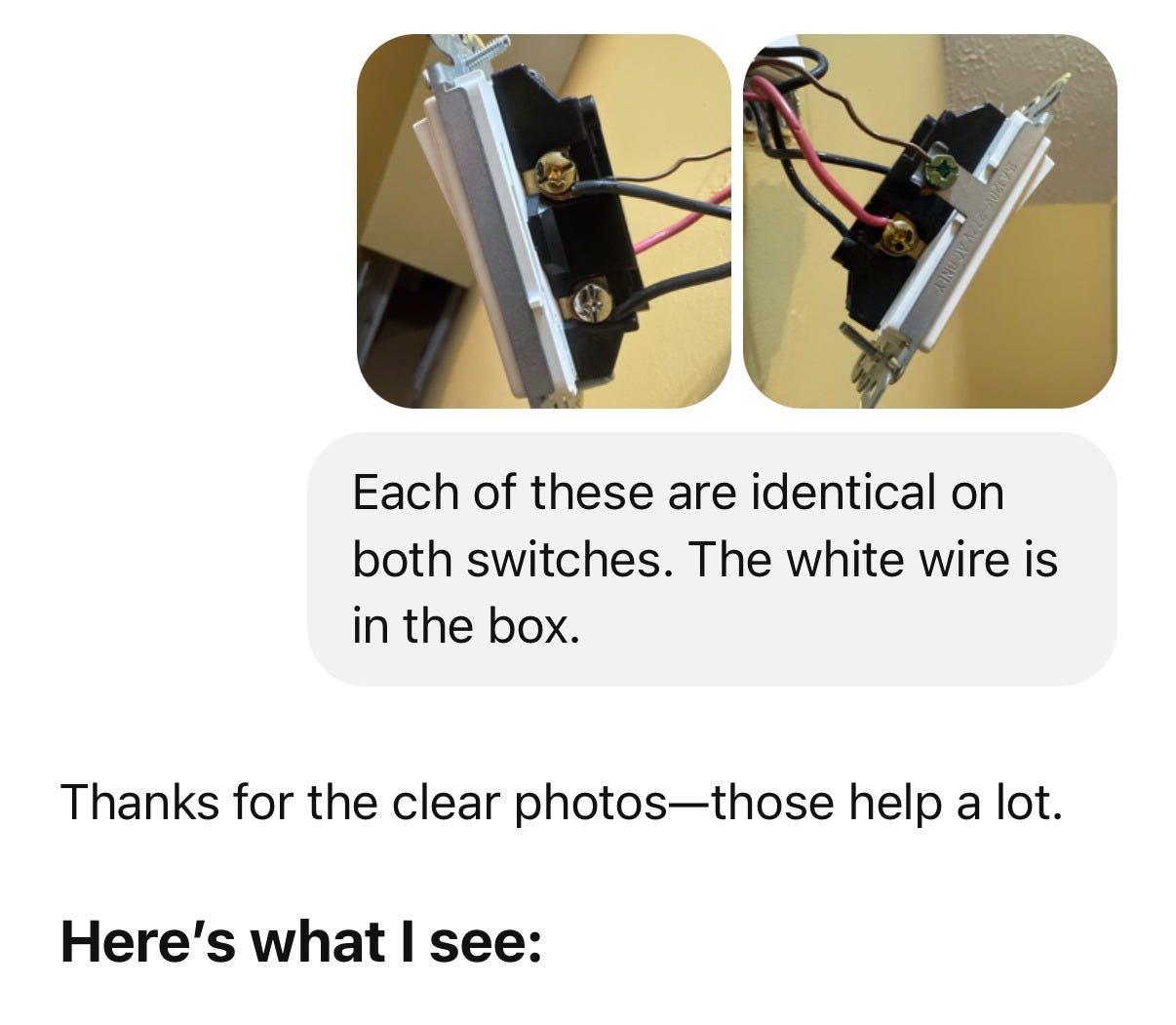
I took a few photos of the switches—both sides of the switches with all of the wires—and uploaded them into an AI model.
Ask:
“I’m replacing a couple of 3-way switches. I forget—which wires are the line, load, and travelers?”
Five seconds.
The model looked at my photo, told me exactly what was what, and I was back in business. I asked it a few more questions and I had quickly identified all that I needed to do.
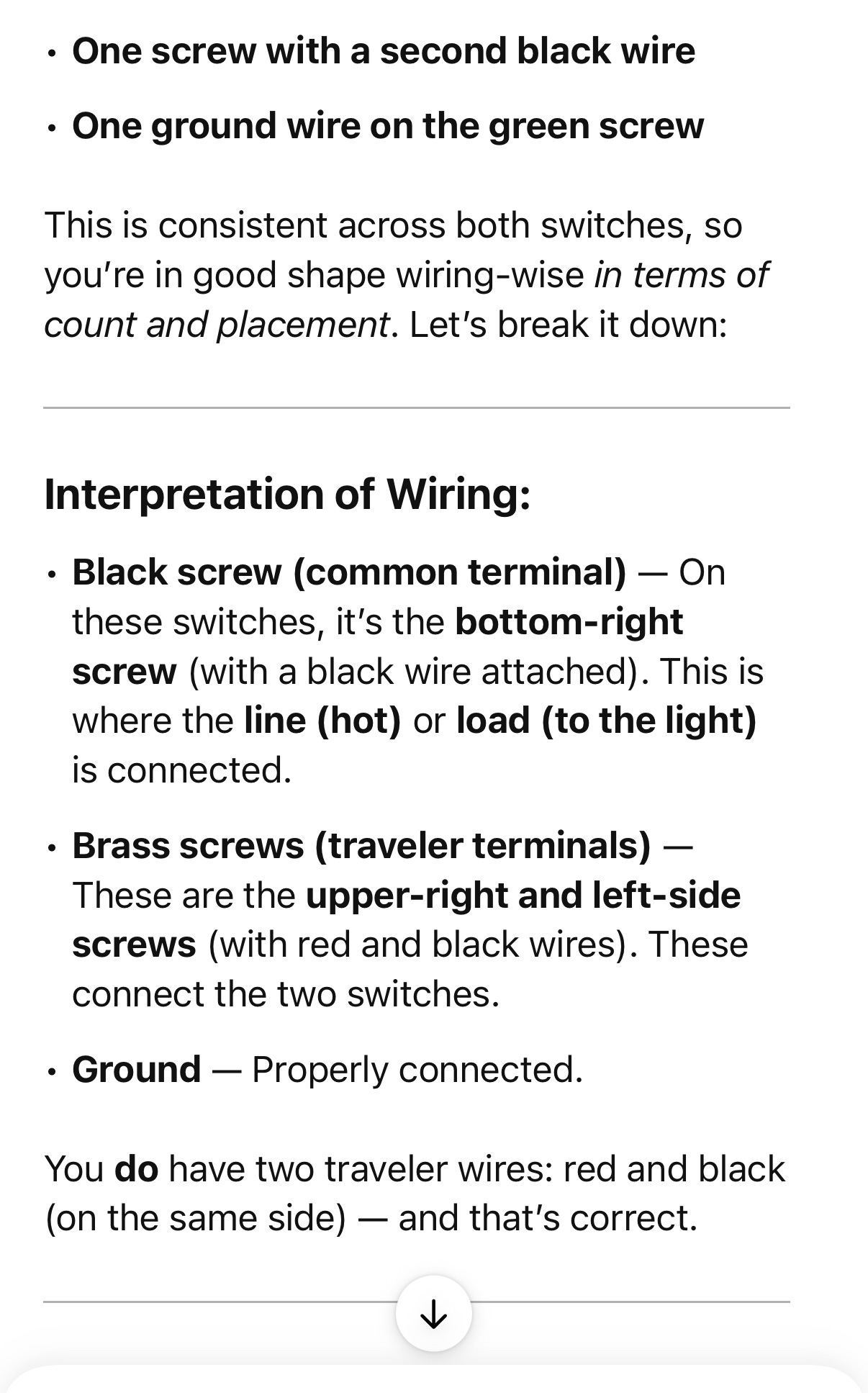
These are the kinds of things that people don’t talk enough about—AI as your expert-on-demand. Not just to write code or emails, but to guide you through real-world tasks that used to require hours of research.
So what sorts of jobs are at risk?
Let’s not pretend that AI is all about being more productive. It’s not. Jobs are going away.
Repetitive, manual jobs are being replaced by AI + robotics.
Admin and back-office roles are being streamlined by smart automation.
Support roles are shrinking as AI takes the first (and often better) pass.
And white-collar workers? If you’re doing copy-paste work, AI’s already doing it faster and cleaner. Analytics? It can handle it A LOT faster and with far fewer errors.
This isn’t something coming in a decade. This is already happening—in warehouses, in call centers, and even in mid-sized offices that are trimming headcount in favor of AI tools.
What Comes Next?
Pair this with the leaked Shopify CEO memo (more on that in another post), and the message is clear:
“We're not just using AI to do more—we’re using AI to need fewer people.”
Companies are choosing lean and fast over legacy systems. If you're not adapting and if your team isn’t adding AI as a team member, you’re falling behind.
So here's what to do:
Get fluent in AI now. Not just using tools—but learning how to ask, test, build, and apply.
Train your team. Your people won’t drift into AI literacy. You’ve got to lead them there.
Stay honest. Don’t downplay the job impact. Prepare your people with you—not after you.
Final Word
GenAI isn’t just a better Google. It’s a shift in how we work, think, and solve problems.
If you're not already using it to speed up the boring stuff, you’re already behind.
We’re not talking about the future anymore.
We’re living in it.
Hold on!
Great insight! For the past two years I have used AI more frequently than I ever imagined. From coding to use in our LMS to instructional design content creation to myriad other daily work and personal uses, it is my go to problem solver. I’m training others how to master their prompt engineering and to use AI to streamline their world. Look forward to part 2.