


When I opened new Claude Opus, I saw a banner that said, 1 million‑token context window now available. I had to read it twice. Maybe three times. That’s roughly ten times what we had before. If you have no idea what I am talking about, don’t worry about the vocabulary. Keep reading and it should make sense.
I immediately thought about the work arounds that I’d been using. I had been splitting documents, summarizing content, losing content between conversations. This new limit changes everything. We went from fitting a children’s book to jamming several novels worth of information into a single conversation. We went from being able to put in a decent sized children’s book to now putting a few Tom Clancy novels into context!
Here’s my reality. I don’t just AI for code. Remember, I’m more of a wannabe coder than a REAL coder. Most of my AI work is for missions strategy, content creation, training materials, automation, efficiencies, ideation, and organization planning. It’s my thinking partner.
Yesterday morning, I was leading AI training from missionaries in Asia. Thanks to jetlag, I found myself wide awake at 1 AM, rethinking my entire presentation that was to start in just a few hours. Dangerous move, I know… but if you know me, you’re not surprised. When I rewrote it, it was really how to present it. I have done this presentation 100+times over the past few years and it always changes!
By 3 AM, I’d completely rebuilt the presentation model of the training. I created a full website where participants could have access to all of the content, every prompt template, all of the breakout exercises, all of my notes, and tools they could take with them. It pushed us to a live and interactive day.
I built the first version of that website and pushed it to my github and then a new website within about 10 minutes. The next two hours I spent iterating the schedule and content. By 8 AM, I was presenting the new content in the new format and it was WAY more polished that my previous iterations.
How did I do this?
I talked to Claude. When I say talked, I literally spoke to Claude and told it what I wanted and it built it. Claude had all of my content and it knows me. It’s not just limited to my presentations from this session, but all of who I am and what I do. That’s so different that when we used AI 3 years ago. This really wasn’t even a possibility a few months ago.
Three Ways This Actually Matters (beyond coding)
1. You Can Work With Complete Context
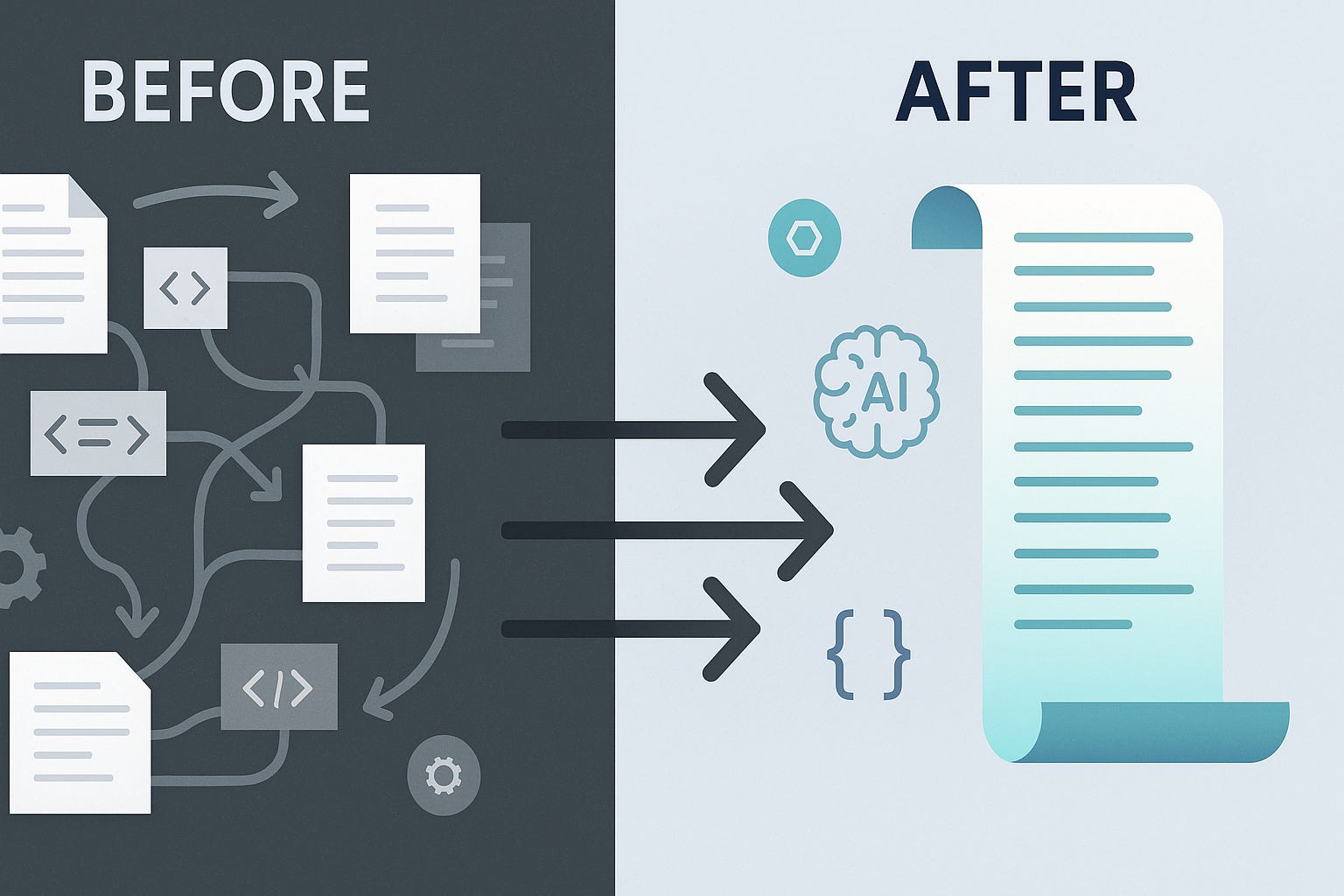
Before: I’d have to summarize meeting notes, trim down strategic documents, or break my project documentation into chunks before asking for help. AI couldn’t process all of my information.
Now: I can drop entire project folders, full meeting transcripts, complete research documents, or ministry plans into Claude and get feedback that references everything directly. No more “can you remind me what we discussed earlier?”
Practical example: When I built this training, I added folders of my previous presentations on AI trainings for faith based orgs, all of my tool documentation, and specific notes about what I was looking for in this specific training with this specific audience. Claude helped me identify contradictions, suggest better frameworks, and reorganize the training. It did this all while seeing the complete picture.
2. First Drafts Become Final Drafts
Writing multi-chapter guides used to mean a painful loop: write a section, get feedback, paste it back with edits, lose some context, repeat. Each iteration degraded the coherence.
Now: Feed the whole document at once. Claude can do global edits—reorganizing chapters, fixing terminology consistency, improving narrative/training flow all without you having to re-paste everything after each round.
Practical example: I built a tool on a flight where I thought I knew what I wanted but by the time I landed, I had gone through five different iterations resulting in something I couldn’t have even imagined when I started. FIve iterations on one long flight with a ready to ship solution. I did all of this with resources created in 20+ language versions. I could keep all the content, structure, and translation flow in context simultaneously. No more tracking which version had which edits. All versions had access to all edits. Ship fast, iterate, and reship five times on one flight. Each version had major new features.
3. It’s Smarter About What Matters
A million tokens sounds expensive. But Claude automatically compresses less-relevant information while keeping the critical stuff.
Practical example: When I was troubleshooting configuration issues across multiple servers, I dumped massive log files into Claude. It automatically focused on the actual error patterns and ignored the noise, all while keeping costs reasonable while still having access to everything. This is my secret sauce that actually allows me to “code” because I would never find those coding errors and it certainly wouldn’t be secure without AI help.
The Real Shift
My thinking changed from “How do I squeeze my problem into the AI limit?” to “What becomes possible now that the limit is basically gone?”
The answer isn’t just bigger tasks. The answer is (should be) smarter tasks. Work that needs you to see the whole picture at once:
Strategic planning that connects organizational goals, team capacity, current projects, and resource constraints.
Content creation that maintains consistency across languages, platforms, and audiences.
System troubleshooting that needs to trace issues across multiple servers, configurations, and error logs.
Training development that weaves together pedagogy, participant needs, technical content, and delivery methods.
Bottom line: We can finally work the same way we think. Holistically, instead of artificially chopping everything into digestible pieces.